Vredestein winter tyre philosophy and technology
The Dutch company was founded in 1909 and is one of the oldest tyre brands in Europe; the Indian group Apollo Tyres bought it in 2009. For the buyer that has one practical consequence: the priorities of the range are set by Apollo's European research and development centre in Enschede, so the tyres are built for the Central European winter of wet roads and slush, not for Nordic ice. In the European market the brand sits on the boundary between premium and the upper mid-range.
The production site, though, is changing. Apollo Tyres announced on 25 April 2025 that tyre production at the Enschede plant will end, with summer 2026 as the deadline. The brand and the development centre stay in the Netherlands, but European volume production moves to Hungary.
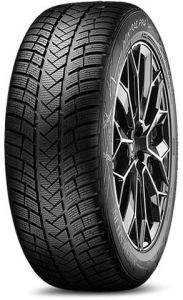
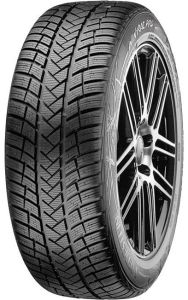
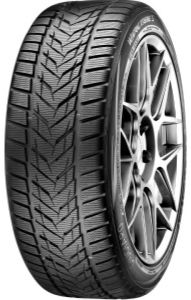
On the engineering side the direction is the same across the range: a compound that does not harden in the cold, and plenty of biting edges. For the newest Wintrac Pro Plus the manufacturer cites a new-generation polymer and resin compound that keeps the tread blocks flexible even in hard frost, sharply angled centre grooves and sipes in the shoulder area. Against the previous generation the promised gains are 4% better braking on snow, 5% better traction, up to 20% better handling on snow and up to 7% lower rolling resistance; the reference size is 245/45 R18 100V XL.
The model range by application
The choice starts with the size, not with the model name: first work out what fits the particular car, and only then look at which model covers it. The size, load index and speed rating you need are read off the tyre sidewall, the sticker on the driver's door frame, the owner's manual or the fuel filler cap. The registration certificate does not carry the tyre size.
| Model | Studs | Segment | Available diameters | 3PMSF |
|---|
| Wintrac Pro Plus | Studless | UHP tyre for powerful cars and SUVs, the widest line in the range | R16-R22 | Yes |
| Wintrac Pro | Studless | UHP, previous generation | R16-R22 | Yes |
| Wintrac Xtreme S | Studless | UHP, oldest generation, only a few sizes left | R18-R19 | Yes |
| Wintrac | Studless | Standard tyre for everyday passenger cars | R15-R19 | Yes |
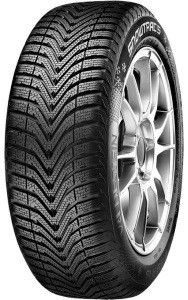
| Snowtrac 5 | Studless | Small and compact cars, narrow sizes from 155 mm | R14-R16 | Yes |
| Comtrac 2 Winter Plus | Studless | Vans and light commercial vehicles, C marking | R14-R17 | Yes |
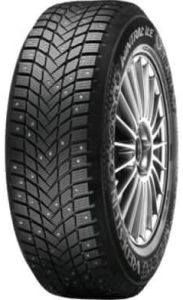
| Wintrac Ice | Studded | Icy routes, speed rating T | R16-R19 | Yes |
Three of these models are generations of one and the same UHP line. The Wintrac Pro Plus is the newest, the Wintrac Pro the previous one, and the Wintrac Xtreme S the oldest, now left in the range in only a few sizes. An older generation is not a weaker winter tyre: the marking is the same 3PMSF, and the requirements it meets are the same. What differs is the choice of sizes - the older the line, the fewer sizes remain in it, so in practice the older generations are chosen by drivers whose size is no longer covered by the newest one.
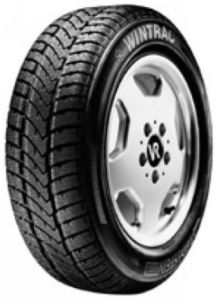
The standard Wintrac is an everyday tyre with no pretensions. According to the manufacturer it has a high-density silica compound, patented 3D sipes and a 5% larger contact patch with the road, which give it up to 10,000 km more service life and 10% better aquaplaning resistance. The Snowtrac 5 is built around its sipes: of varying shapes and depths, non-parallel, and at the model launch their total length was stated to be more than 30% greater than on the Snowtrac 3. Noise is damped by the Stealth Design tread pattern.
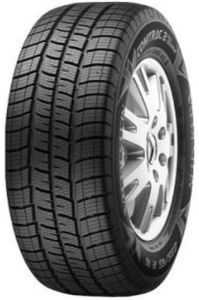
- C marking. The Comtrac 2 Winter Plus is the only tyre in this range for vans and light commercial vehicles. Vredestein cites a denser arrangement of the metal cord in the steel belts so that the tyre holds its shape under a heavy load; a passenger-car tyre in the same size but without the C marking will not carry the load a laden van needs.
- Extra Load (XL). In this range XL is the norm rather than the exception. The reinforced casing takes a higher load, which a heavier car or an electric car needs; if the car maker does not call for XL, a standard-construction tyre will ride more softly, but both need the correct pressure.
- Rim protection (RP). A raised rubber rib on the tyre sidewall protects the rim edge from kerbs. It is fitted to some sizes across several models, so look for it in the data of the specific product, not at model level.
- RunFlat and studdable tyres. The Vredestein winter range has neither studdable models nor RunFlat construction. If the car left the factory without a spare wheel, the choice is in our RunFlat tyre section.
Speed ratings in the range run from R to Y; a lower one than the car maker specifies is not the right choice, while a higher one is usually not needed in winter.
What the independent tests show
This brand has a long test history. The Wintrac Pro Plus scores 8.6 out of 10 overall in the Tyre Reviews summary, where it is described as a wet-weather specialist with weak braking on dry roads. The braking-distance figures against the premium-class average show the same: 1.4% longer on snow, 2.2% on wet, but already 4.2% on dry asphalt. Rolling resistance is 10.7% higher, exterior noise 71 dB, wear 0.201 mm per 1000 km. Across the eight 2025 tests listed by the same site the average finish is eighth and there is not a single test win: 4th of 13 in the Auto Bild SUV group, and 13th of 22 in the Auto Bild test in size 225/40 R18, precisely because of the dry surface. The best published result is elsewhere: in the Auto Bild Allrad group test in size 215/55 R17 the tyre took 3rd place out of 12 with an "exemplary" rating.
The previous generation has been tested more often. The Wintrac Pro overall score is 9.0 out of 10 from 37 tests between 2018 and 2024, with an average sixth place and one test win. In the ADAC 2023 test in size 225/45 R17 it received an overall score of 2.6 and a projected mileage of 48,800 km; on the ADAC scale a lower number is better, and the breakdown is characteristic - 2.5 on snow and ice, 2.7 on dry asphalt. The standard Wintrac stands out on ice: in Tyre Reviews measurements its braking distance there is 2.9% shorter than that of premium rivals, though its interior noise was the highest of all the tyres in the test. The ADAC score in size 205/60 R16 shows the same picture on a different scale: 3.1 overall, 2.2 for winter surfaces, 3.4 for dry asphalt.
The Snowtrac 5, Comtrac 2 Winter Plus, Wintrac Xtreme S and Wintrac Ice are not represented in the current independent test summaries, so only the manufacturer's own data is available on their performance.
Which drivers Vredestein suits in Latvian conditions
Most winter kilometres here are covered on wet, salted asphalt, and that is where this range is at home. A Golf-class hatchback or a compact estate is well served by the Wintrac, a small car on narrow R14 and R15 rims by the Snowtrac 5, and a laden van by the Comtrac 2 Winter Plus with its C marking. Electric cars run on the same models; you simply have to respect the load index the car maker specifies.
If the winter is mostly spent on ice and unmaintained country roads, the choice within this brand narrows to the Wintrac Ice, and that in a narrow band of diameters and with speed rating T. A wider choice awaits in our studded tyre section, where larger diameters and higher speed ratings are covered by Nokian and Sailun. In Latvia studs are permitted from 1 October to 1 May, and one car may not have studded and studless tyres at the same time - so the CSDD states. The same authority points out that since 1 October 2024 only 3PMSF-marked tyres count as winter tyres during the winter period; every tyre in this range carries it.
At the large-size end the brand is strong. The Wintrac Pro Plus reaches R22 and 325 mm in width, XL is marked on almost every size in it, and the studded lines do not cover sizes like these. If the size you need has run out in the newest generation, the Wintrac Pro and Wintrac Xtreme S do the same job, so there is no need to compromise on size for a heavy SUV or a powerful electric car.