What T0, T1 and T2 mean
Tesla-approved tyres are marked with the letter T on the sidewall. T0 denotes the first approved version, and when the tyre is later revised or a new technology goes into it, the version becomes T1, T2 and so on. The number refers to the tyre model, not to the car. Tesla puts it plainly: a T1 Michelin Primacy is newer than a T0 Michelin Primacy, but not necessarily newer than another manufacturer's T0 tyre.
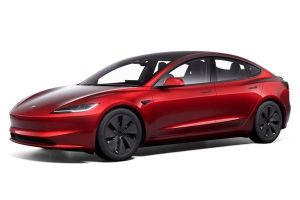
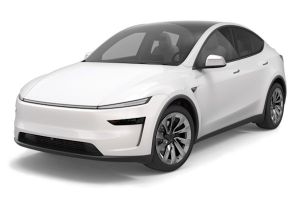
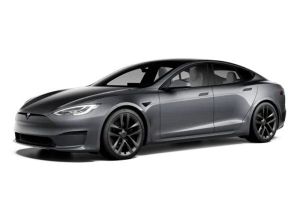
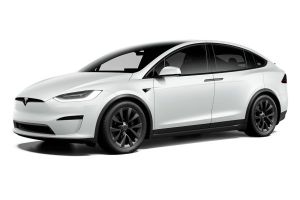
The widespread belief that T0 belongs to the Model 3 and Model Y while T1 belongs to the Model S and Model X is therefore wrong. Tesla's own replacement tyre list for the Model Y includes T0, T1 and T2 tyres for one and the same car. Tesla does not publish exactly how the versions of a single model differ, so detailed explanations about the compound or the casing are guesswork.
Is the T marking mandatory?
No. Tesla recommends its approved tyres, citing lower road noise and better handling, but does not set them as a requirement and does not tie them to the warranty. Asked whether an electric car needs specially marked tyres, ADAC says no and stresses that what matters is the size and load index approved for the particular car. A tyre without the T marking may have higher rolling resistance and let more noise into the cabin, but the only figures published on that come from Tesla itself, about its own tyres. Availability is a practical argument too: most approved tyres are sold by Tesla alone.
Why it is often V or W rather than Y
Speed rating V corresponds to 240 km/h, W to 270 km/h and Y to 300 km/h. The rating on a factory tyre tends to be lower than on a sports car because manufacturers optimise the tyre for range, and a low rolling resistance compound and a stiffer Y-class construction pull in opposite directions. The top speeds Tesla quotes mostly stay below the W limit: Model Y RWD - 217 km/h, Model 3 Performance - 261 km/h.
In Latvia the tyre's speed category and load index may not be lower than the vehicle's technical parameters require, and what counts is the car's design maximum speed, not the road speed limit. At the roadworthiness test a rating that is too low is a major defect, and the car does not pass with it.
Load index and vehicle weight
An electric car weighs roughly 200-300 kg more than a comparable car with a combustion engine, Auto Bild writes, and that mass ends up on the tyres. The gross weight of the Model Y Long Range AWD is 2517 kg. That is why factory fitments are almost always XL tyres, and already HL in some sizes. When Continental introduced HL, it put the difference in numbers: in one and the same size the SL version carries 670 kg, XL - 750 kg and HL - 825 kg. ADAC adds that tyre wear increases in proportion to weight, so a set of tyres lasts a shorter time on a heavy car than on a light one.
How to find your car's size
The size is written on the tyre sidewall itself, for example 255/45 R19 104W. The same information, together with the recommended pressure, is on the sticker in the driver's door frame and in the owner's manual, and on cars with a combustion engine there is often such a sticker on the fuel filler cap as well. The registration certificate does not carry the tyre size, so there is no point looking for it there. On some trims the front and rear sizes differ, so check both axles.