Why Continental builds three different tyres for winter
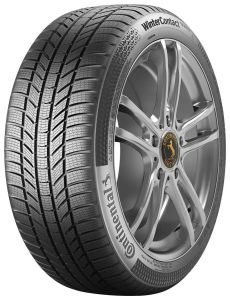
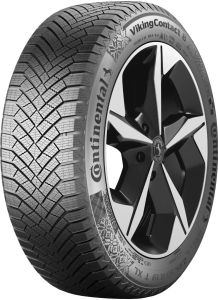
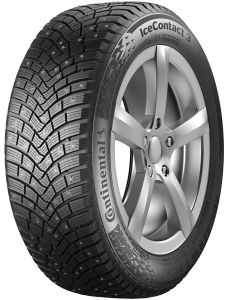
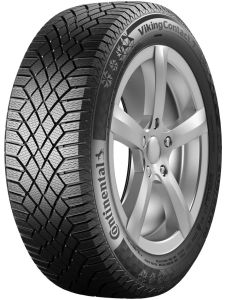
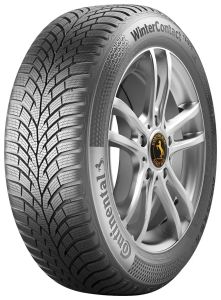
The German manufacturer's winter range is not the evolution of a single model. Continental splits the range in two: the Central European WinterContact with its Cool Chili compound, and the Nordic line, which covers VikingContact and IceContact with Nordic compound rubber. The difference starts with the compound, not with the tread pattern. Cool Chili stays stable on wet, salted tarmac at temperatures around zero, while Nordic compound is softer and stays flexible even in hard frost.
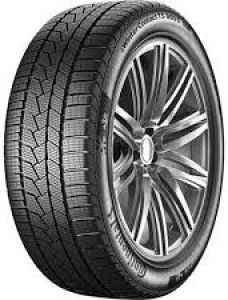
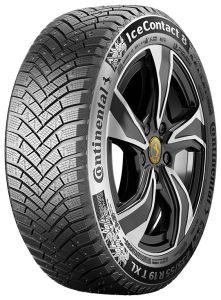
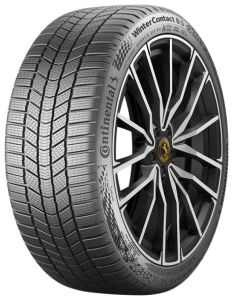
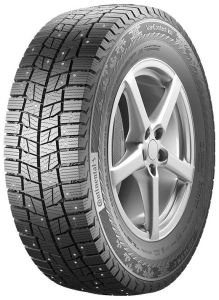
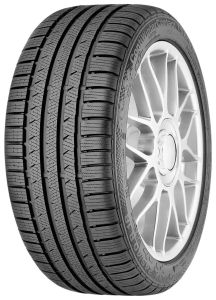
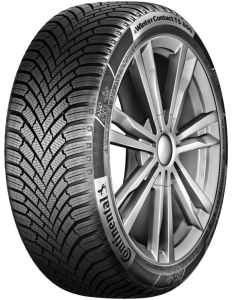
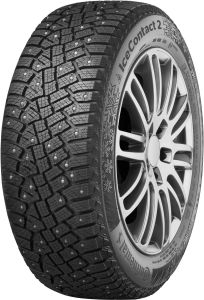
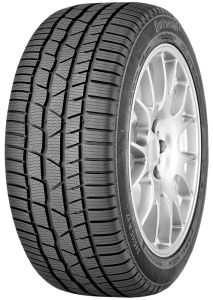
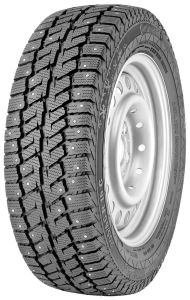
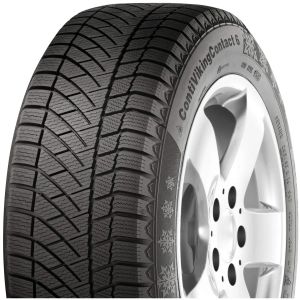
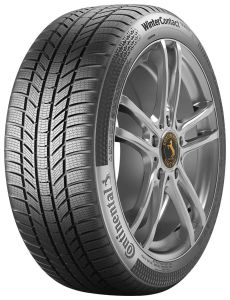
The TS 870 P no longer has the classic V-shaped pattern - in its place is a stiffer structure with four wide circumferential grooves, and water is cleared from the contact patch by Hydro Grooves and Liquid Layer Drainage. In snow the work is done by the SnowCurve+ groove wall structure. The main novelty on the VikingContact 8 is a three-layer sipe: the straight section holds dry tarmac, the zigzag section spreads the forces, and the wavy section gives longer biting edges in snow. On the IceContact 3 the studs are moulded into the tyre during production, and in the ContiFlexStud technology used in sizes from 17 inches upwards the stud sits in a rubber sleeve rather than a rigid socket; according to the manufacturer this gives roughly 7% more grip on ice and 20% less road surface wear than conventional studs.
The model range by application
The range is easier to read by the road and the car each model was built for. The generation number says little about that. The table brings together the main models represented in the catalogue. The weight of the range sits in the large diameters: more than half the sizes are R18 or bigger, so a heavy crossover has a wider choice here than a small city car.
| Model | Studs | Segment | Diameters | 3PMSF |
|---|
| WinterContact TS 870 P | studless | passenger car, SUV | R15-R23 | yes |
| WinterContact TS 860 S | studless | UHP passenger car, SUV | R16-R23 | yes |
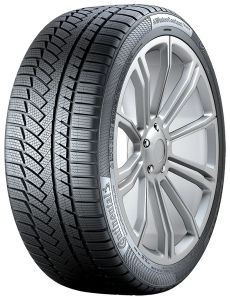
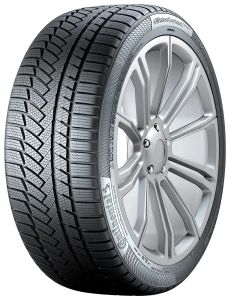
| WinterContact TS 850 P | studless | passenger car, SUV | R16-R22 | yes |
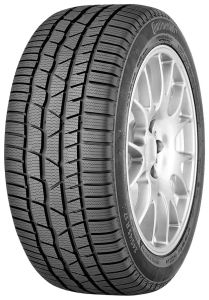
| WinterContact TS 830 P | studless | passenger car | R15-R21 | yes |
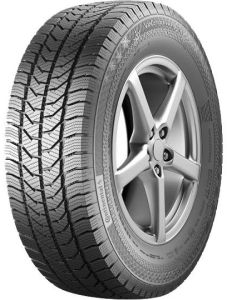
| VikingContact 8 | studless | passenger car, SUV, EV | R15-R22 | yes |
| VikingContact 7 | studless | passenger car, SUV | R14-R22 | yes |
| IceContact 3 | studded | passenger car, SUV, EV | R14-R22 | yes |
| IceContact 2 | studded | passenger car, SUV | R16-R20 | yes |
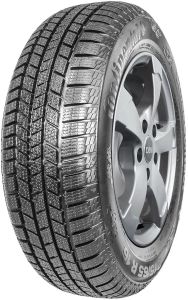
| CrossContact Winter | studless | SUV, off-roader | R15-R22 | yes |
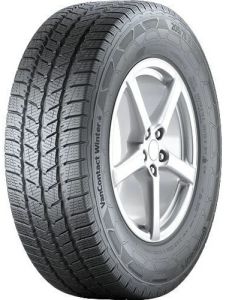
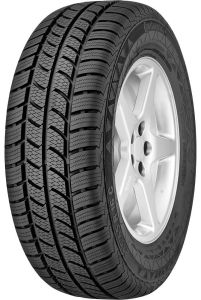
| VanContact Winter | studless | commercial vehicles, C class | R14-R17 | yes |
| VanContact Ice | studded | commercial vehicles, C class | R15-R17 | yes |
Before ordering it is worth checking a few things that decide the purchase more often than the choice of brand:
- Load index and XL or HL. Heavy crossovers and electric cars mostly require an XL casing, and if the factory fitted an HL tyre, the replacement has to be HL as well.
- C class for a van. Sizes in the VanContact and Vanco lines are commercial vehicle tyres with higher load indexes; a passenger car tyre does not replace them, even if the size matches.
- RunFlat cannot be swapped for an ordinary tyre. Some TS 860 S and TS 850 P sizes are RunFlat, and they are meant for cars with a pressure monitoring system that left the factory on exactly these tyres.
- Width. In winter the narrowest permitted tyre usually works better on snow and slush than a wider one, because the higher pressure helps it push through the layer of snow.
The TS 850 P and TS 830 P on the list are older-generation tyres. They are still useful if a car needs a particular factory homologation marking or the newer model lacks the size required, but they are no longer the default choice.
Where each family stands in independent tests
In the AUTO BILD sportscars 2025 winter tyre test the WinterContact TS 870 P came out the winner with an overall score of 1.3; eleven tyres in size 235/50 R19 were compared on an Audi Q3 Sportback. In the joint 2025 test by ADAC, ÖAMTC and TCS the same model was rated "good" in size 225/40 R18, while eleven models from budget and little-known brands were rated "poor" there because of wet braking and stability in snow.
Aggregated results give the clearest picture. In Tyre Reviews data the TS 870 P scores 82.9 out of 100 in the wet but only 61.4 on ice; across around thirty independent tests it has eight wins and an average fourth place. The VikingContact 8 figures are almost a mirror image: ice 89.4, wet 65.5. This is not a question of a better or a worse tyre, but of a design choice.
In the Finnish Tekniikan Maailma 2025 test in size 205/55 R16 the VikingContact 8 took first place in the studless group, while the IceContact 3 came second among the studded tyres, and on ice in particular it was not among the best in the test. The VikingContact 8 also won the Swedish magazine Vi Bilägare studless tyre test of October 2025, where it scored 91 points out of 100. Winter tests of this calibre are run on Finnish ice proving grounds such as Test World in Ivalo, so the results are closer to a Latvian winter than Central European measurements.
Who they suit in Latvia and who they do not
For most drivers in Latvia the winter kilometres are covered on cleared, salted tarmac. That is where the WinterContact works exactly as intended, and this family also carries the highest speed ratings for more powerful cars. For the country roads of Vidzeme and Latgale, where ice is no exception, the IceContact 3 makes more sense. If studs are ruled out by an underground car park or trips abroad, the VikingContact takes their place.
The other side deserves an honest mention too. If the only criterion is maximum grip on clear ice, the IceContact 3 is not the top of the segment: in the studded class the Nokian Hakkapeliitta is usually stronger on ice in independent tests. The weak spot of the VikingContact is deep slush and aquaplaning, so anyone covering motorway kilometres every day is safer staying with the WinterContact. If the winter kilometres are covered almost entirely on clear tarmac, the soft Nordic family will wear out faster than the owner expects. None of these tyres is suitable in summer, because a winter compound turns too soft in warm weather and braking distances on warm tarmac get longer.
The legal part is short. The winter period set by the CSDD runs from 1 December to 1 March, the minimum tread depth for a passenger car is 4 mm, and studded tyres may be used from 1 October to 1 May. From 1 October 2024 only tyres carrying the 3PMSF marking are permitted during the winter period, and every model listed here has that marking. Studded and studless tyres must not be mixed on the same car, so an IceContact is always a set of four.
The dates winter tyres become mandatory, and when it is worth fitting them earlier, are covered separately - when to fit winter tyres.