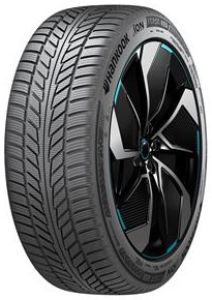
Factory sizes by trim
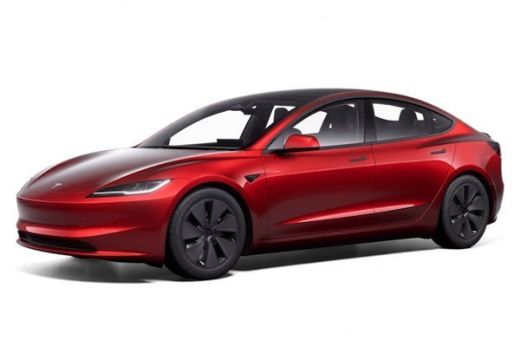
The choice on the Model 3 is narrow, and that makes life easier. On the Long Range, Standard Range, Standard Range Plus and Mid Range trims the factory tyre is 235/45 R18 98W or 235/40 R19 96W. The 20-inch sizes 235/35 R20 92Y and 245/35 R20 95Y appear on the Performance, Premium and Long Range lists. All four sizes apply to both generations - the 2017-2023 cars as well as the 2023-2026 ones.
Rim width and offset
The 18- and 19-inch tyres are meant for an 8.5J wide rim with an offset of 35 to 40 mm. On 20 inches the permitted width is 8.5-9J and the offset 34-40 mm. The staggered combination of 245/35 R20 with 285/30 R20 narrows that window to 9J and ET34, so second-hand rims are worth measuring before you buy.
18, 19 or 20 inches
Here the difference is measurable, and the numbers come from Tesla itself. On the EPA cycle the Model 3 Performance covers 322 miles on 18-inch rims against 299 miles on 20-inch rims, while the Model 3 Standard RWD does 554 km on 18 inches under WLTP against 520 km on the optional 19-inch rims. Part of the difference is not in the tyre: Tesla has stated that the aerodynamic wheel covers on their own improve efficiency by about 10% compared with a bare 19-inch Sport rim. In braking, a bigger rim by itself changes nothing. In TÜV Süd's measurements on a BMW i4 the same Goodyear tyre in 18 and 19 inches stopped in practically the same distance, and the worst result came from the largest rim with the cheapest tyre.
The load index falls as the rim grows
The load index of the 235/45 R18 is 98, on the 235/40 R19 it is 96, and on the 235/35 R20 only 92. The wider 20-inch tyre, 245/35 R20, wins part of it back with 95. The consequence is simple: the index specified for a given size must not be reduced, even when a cheaper tyre in the same size with a lower number looks tempting. An electric car weighs roughly 200-300 kg more than a comparable car with a combustion engine, Auto Bild notes, so there is no spare capacity in these figures.
Different sizes front and rear
From the factory the Model 3 runs the same size on all four wheels. The table also lists staggered combinations: 235/40 R19 with 275/35 R19 at the rear, on 2017-2023 cars also with 275/40 R19, likewise 235/35 R20 with 275/30 R20 and 245/35 R20 with 285/30 R20. These are optional fitments with rims of their own rather than factory equipment, and the tyres then come in pairs instead of sets of four.
A winter set and where to check the size
The 18-inch size has the widest choice of the four, so the hunt for a winter set usually ends sooner there than on 20 inches. The size that is right for a particular car is on the marking moulded into the tyre sidewall, on the sticker in the driver's door frame or in the owner's manual. The registration certificate does not list the tyre size.
What T0, T1 and T2 mean
Tesla-approved tyres are marked with the letter T on the sidewall. T0 is the first approved version, and when the tyre is revised with a new construction or technology, it gets T1, T2 and so on. The number refers to the tyre model, not to the car: Tesla itself explains that one manufacturer's T1 tyre is newer than the same manufacturer's T0 tyre, but not necessarily newer than another manufacturer's T0 tyre. The widely repeated scheme that divides T0, T1 and T2 between car models is therefore wrong. Tesla's own replacement tyre tables list T0, T1 and T2 tyres for one and the same car.
Tesla does not publish anywhere exactly how the T0 and T1 versions of the same model differ. What is known is that the tyres are developed together with the tyre manufacturers and that most approved tyres can only be bought from Tesla itself. They are not mandatory. Tesla does recommend these tyres, citing lower road noise and better handling, but neither the warranty terms nor anything else makes that choice a condition. ADAC takes the same position: what matters is the size and load index approved for the particular car, and at least in the case of premium manufacturers any tyre with matching specifications can be considered suitable. A tyre without the T marking may have higher rolling resistance and therefore less range, as well as more noise in the cabin.
Why an approved tyre is often V or W rather than Y
The speed rating indicates the maximum speed at which the tyre may be driven: V is 240 km/h, W is 270 km/h and Y is 300 km/h. ADAC explains that above the H rating a tyre's load capacity falls as speed rises, so a higher rating calls for a casing that withstands more heat and sustained load. On an electric car's tyre that works against both of the main goals. Manufacturers point out that when a tyre is optimised for electric cars the priority is range, while the weight of the battery calls for a higher load index, XL or HL. A stiffer and heavier Y-class construction makes both harder, and for most Tesla models the design speed stays below the W limit.
TPMS when changing tyres or wheels
Tesla uses two generations of pressure sensor that are not compatible with each other: 433 MHz radio in early cars, Bluetooth Low Energy in newer ones. That becomes important when buying a second set of wheels with its own sensors. After a wheel change the sensors relearn by themselves if you drive faster than 25 km/h for a few minutes; older manuals give ten minutes for the same procedure. When different tyres are fitted to the same rims, nothing needs to be done. Manual relearning on the touchscreen exists only in those cars that do not have the automatic version. The manual warns that after a tyre change outside a Tesla service centre the sensor may not work until Tesla carries out the installation procedure, and that the sensor battery cannot be replaced - the whole sensor is replaced. In Latvia this is not merely a question of convenience. On category M1 cars first registered on or after 1 January 2018 with a manufacturer-fitted TPMS, the system has to work, and missing sensors or a lit warning light are a defect at the roadworthiness test.
Winter tyres in Latvia
From 1 December to 1 March a car with a gross weight of no more than 3.5 t must have winter tyres. The roadworthiness rules require the mountain and snowflake marking (3PMSF); winter tyres carry it, but the M+S designation alone is no substitute and, since 1 October 2024, no longer counts during the mandatory period. Tread depth in this period must be at least 4 mm. At the test 3.0 to 4.0 mm is a major defect, below 3.0 mm already a dangerous one. Studded tyres are permitted from 1 October to 1 May, so the permitted period is wider at both ends than the mandatory one.
These requirements also cover the speed rating. A tyre's speed category and load index may not fall short of the car's technical parameters, and what counts is the car's own design maximum speed, not the road speed limit. A winter tyre rated Q or T on a car with a design speed of 200 km/h or more is a major defect at the test.
Where to find your size
The size, load index and speed rating are written on the tyre sidewall itself. The size and pressure specified by the manufacturer can be found on the sticker in the driver's door frame, in the owner's manual and, on cars with a combustion engine, on the fuel filler cap as well. The registration certificate carries no tyre data, and the technical passport was replaced long ago, so there is no point looking in either.