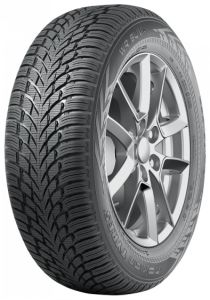
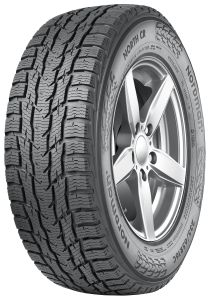
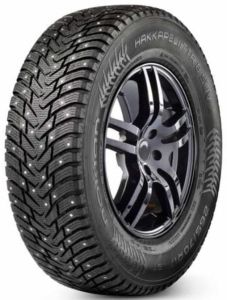
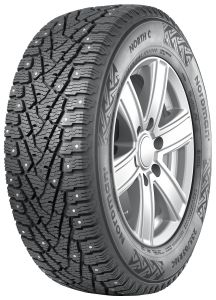
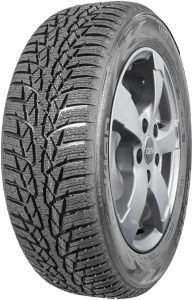
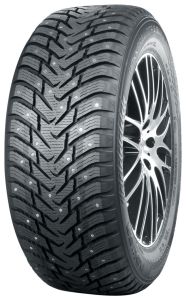
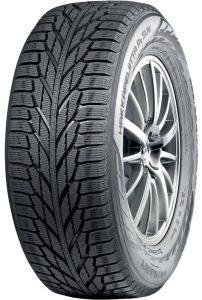
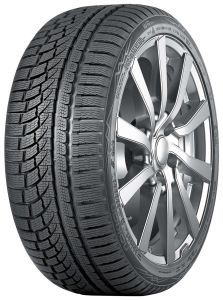
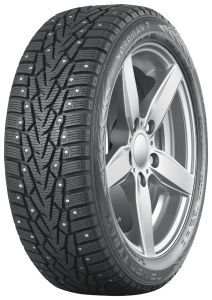
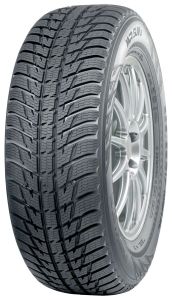
Nokian winter tyre philosophy and technology
The Finnish manufacturer builds a tyre from the ice side rather than the tarmac side, and that is visible in the tread. The first winter tyre, Kelirengas, appeared in 1934 and was intended mainly for lorries, while passenger cars got the Lumi-Hakkapeliitta two years later. Since 1986 the company has had its own proving ground, Ivalo, in Finnish Lapland: according to the manufacturer it sees more than 200 days of frost a year, and the tracks there include a 700-metre indoor ice hall.
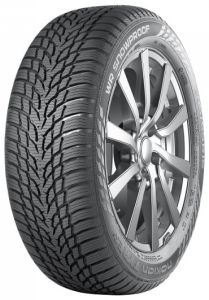
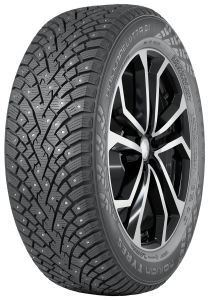
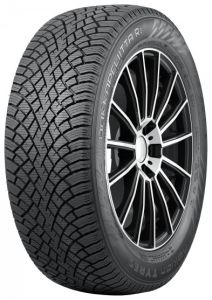
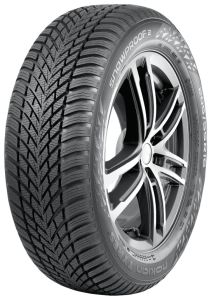
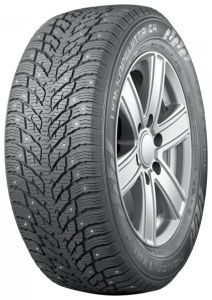
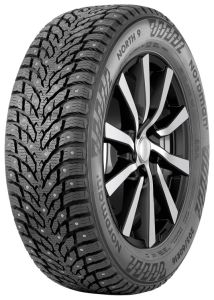
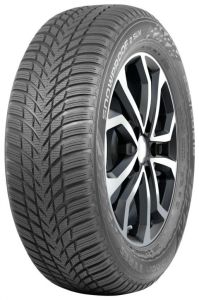
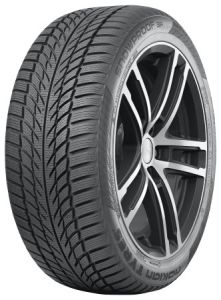
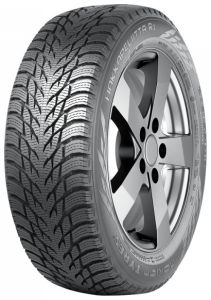
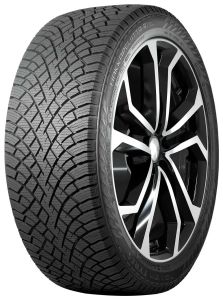
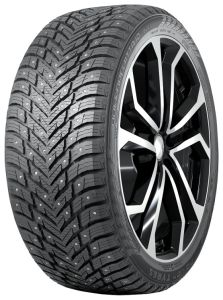
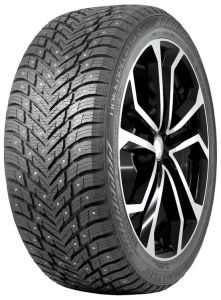
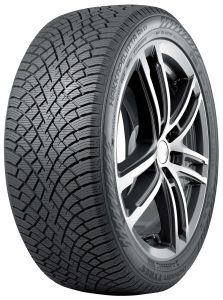
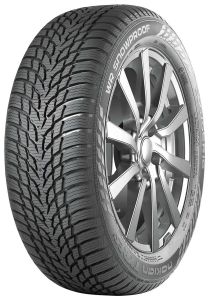
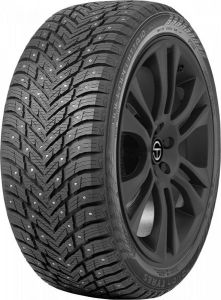
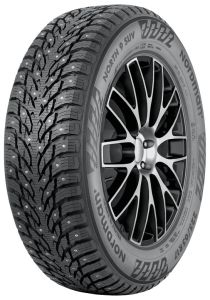
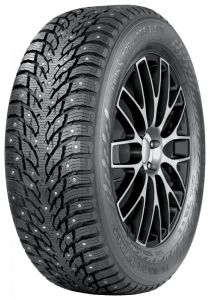
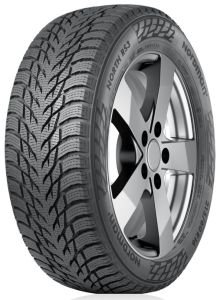
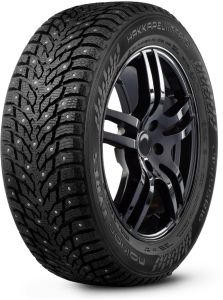
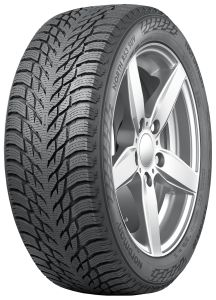
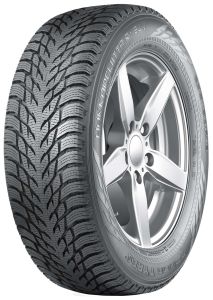
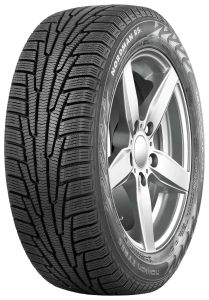
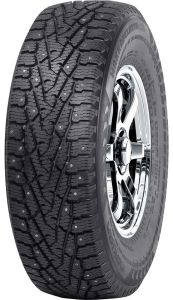
The studded Hakkapeliitta 10 uses Double Stud Technology: the centre studs take care of grip under acceleration and braking, while the star-shaped shoulder studs are turned through 180 degrees so the tyre holds better in a corner. Under every stud sits an Eco Stud 10 base with an air cushion chamber that softens the impact against the road surface. The newer Hakkapeliitta 01 goes a step further. Double Action Stud Technology puts a compound in the stud base that hardens in the cold and pushes the stud out, but in milder weather on clear tarmac lets it retract again. On the studless side the work is done by the compound and the sipes. The Hakkapeliitta R5 tread contains Arctic Grip Crystals, microscopic crystals that act like built-in studs and are exposed anew as the tyre wears. The sipes in this line are divided by job: in the centre they keep the tyre stable on dry roads, in the shoulder they stiffen the blocks for steering, and the pump sipes push water out of the contact patch. The Snowproof line has a harder compound and larger blocks, and its main concern is wet tarmac.
The model range by intended use
The choice starts with one question, the first one asked in the shop: where the car stands overnight and what kind of road it sets off on in the morning. An icy country road and a cleared city street call for two different tyres.
| Model | Studs | Segment | Diameters | 3PMSF |
|---|
| Hakkapeliitta 01 | studded | passenger car, SUV | R14-R22 | yes |
| Hakkapeliitta 10 | studded | passenger car | R14-R22 | yes |
| Hakkapeliitta 10 SUV | studded | SUV, crossover | R16-R22 | yes |
| Hakkapeliitta 10 EV | studded | electric and hybrid cars | R18-R21 | yes |
| Hakkapeliitta R5 | studless | passenger car | R14-R21 | yes |
| Hakkapeliitta R5 SUV | studless | SUV, also EV | R16-R22 | yes |
| Hakkapeliitta R5 EV | studless | electric and hybrid cars | R18-R22 | yes |
| Snowproof 2 | studless | passenger car | R15-R21 | yes |
| Snowproof 2 SUV | studless | SUV, also EV | R16-R21 | yes |
| Snowproof 3P | studless | powerful passenger car | R17-R21 | yes |
| WR Snowproof 1 | studless | passenger car | R15-R20 | yes |
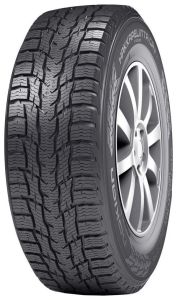
| WR Snowproof C | studless | commercial vehicles | R15-R17 | yes |
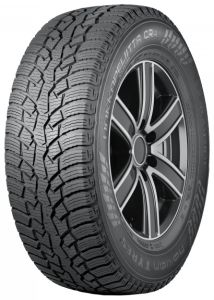
| Hakkapeliitta C4 | studded | commercial vehicles | R15-R18 | yes |
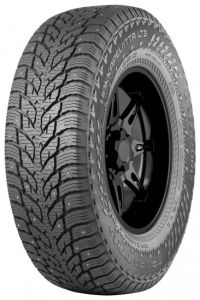
| Hakkapeliitta LT3 | studded or studdable | van, pickup | R16-R20 | yes |
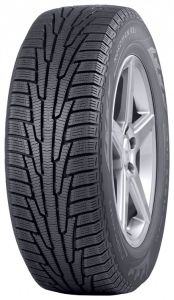
| Nordman North 9 | studded | passenger car, budget | R15-R18 | yes |
Two things are not visible in the table, and those are often what settles the choice. The first is the speed rating: in the catalogue the studded Hakkapeliitta 01, 10, 10 SUV and 10 EV come only with a T rating, that is, up to 190 km/h, because these tyres are designed for northern road surfaces rather than for speed. If the vehicle documents call for H or higher, the studded side rules itself out and Snowproof remains, which is also available in V, W and, in the case of the Snowproof 3P, Y. The second is the load index. On a heavy SUV or an electric car the standard index can turn out to be too low, and an XL marking is not an answer in itself: it has to be compared with the minimum stated in the vehicle documents. The manufacturer states that the Hakkapeliitta 01 covers load indexes from 86 to 117, while the Hakkapeliitta R5 EV and Hakkapeliitta 10 EV cover 92 to 111.
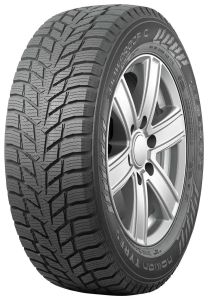
Commercial vehicles have their own sub-group in the range, marked type C, and a passenger car model must not be fitted to a van with a high gross weight. Studdable tyres are the exception here, and they are found mainly among the van and commercial vehicle models. There is practically no RunFlat in the Nokian winter range, so if the car has no spare wheel it is worth checking the specific size straight away.
What the independent tests show
In the studded tyre class Nokian is regularly near the top. In the 2025 Tekniikan Maailma and UTAC test in size 205/55 R16 the Hakkapeliitta 10 won its class with ice braking of 33.9 m, but on dry tarmac it managed 32.4 m and only 12th place. In the same test the Hakkapeliitta R5 stopped in 30.8 m on a dry surface and shared first place, was first on snow with 49.5 m, but came tenth on ice with 47.9 m. That is exactly the trade-off, just put into numbers.
In the 2024 Vi Bilägare studded tyre test in size 225/45 R17 the Hakkapeliitta 10 came first with 11.73 m on ice, while the only studless tyre in the test, the Hakkapeliitta R5, finished seventh with 17.87 m. That same R5 won the snow traction, noise and fuel consumption categories there. The opposite end is shown by the 2025 Teknikens Värld test in size 235/45 R18: the aquaplaning limit was 75-77 km/h for the Central European tyres, 57-67 km/h for the studded ones and 55.7-64.6 km/h for the Nordic studless tyres, and the ice grip of the Central European tyres was rated there as insufficient.
For the Central European line the picture is different. In the 2024 ADAC test in size 205/55 R16 the Snowproof 2 received an overall score of 2.8, or "satisfactory", with a good mark for wet surfaces and a weaker one for braking on ice, while in the 2025 ADAC test in size 225/40 R18 the Snowproof P took eighth place among 32 models. Tyre Reviews rates the ice performance of the Snowproof 2 at 40/100 and notes that on ice it stops 8.7 percent further than its premium rivals; the Hakkapeliitta R5 scores 77.9/100 on the same scale.
Which models suit Latvian conditions
First, the framework set by law. In Latvia winter tyres are compulsory from 1 December to 1 March on vehicles with a gross weight of up to 3500 kg, the minimum tread depth for a passenger car is 4 mm, and studs are allowed from 1 October to 1 May (CSDD). Studded and studless tyres must not be mixed on the same car, so studs should be planned as a set of four tyres. Since the 2024/2025 season only a tyre marked 3PMSF counts as a full winter tyre, and M+S alone is no longer enough to pass the roadworthiness test (LV portāls).
After that, the route decides.
- Uncleared country roads and farm tracks. If every morning starts on an icy dirt road, studs pay for themselves, and the choice is the Hakkapeliitta 01 or the Hakkapeliitta 10.
- City driving and maintained main roads. The Hakkapeliitta R5 is quieter, holds better on wet tarmac and has lower rolling resistance; it can go on as early as the start of autumn, because the studded tyre season does not apply to it.
- A fast car and long trips south. The Snowproof 2, Snowproof 3P or WR Snowproof 1, if the car manufacturer calls for a V, W or Y rating.
- When Nokian is not the right choice. If the car needs RunFlat or a studded tyre rated above T, a suitable size is unlikely to be found in this range, and a better match is likely in our other brand sections.
The Snowproof line should not be bought as a cheaper stand-in for the Hakkapeliitta. On ice it will not replace it, and the test figures show that clearly enough. 3PMSF is the legal minimum here; for a harsh winter Nokian itself advises looking for the Ice Grip symbol as well, and that is carried by the Hakkapeliitta, not by the Snowproof.
Sometimes the honest answer is a different one. A car that spends most of the winter standing in the yard and covers a couple of thousand kilometres on cleared city streets will not earn back the most expensive studded set, and a simpler Nordman model is enough there.
The dates winter tyres become mandatory, and when it is worth fitting them earlier, are covered separately - when to fit winter tyres.