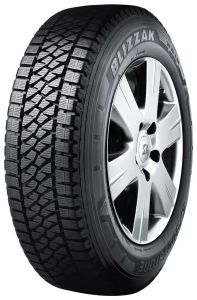
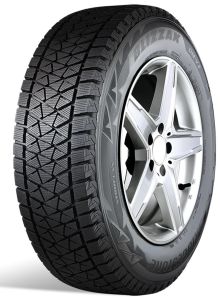
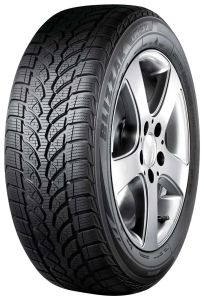
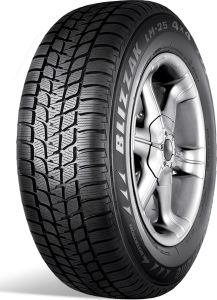
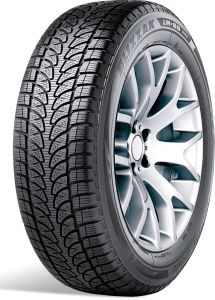
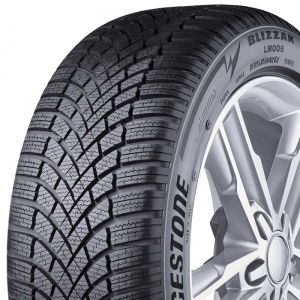
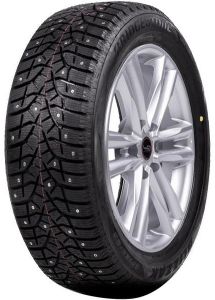
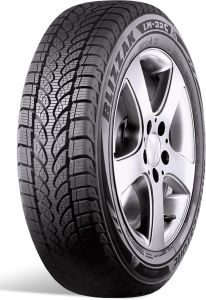
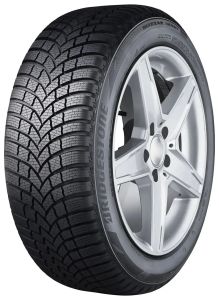
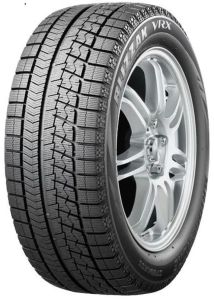
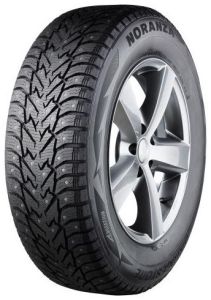
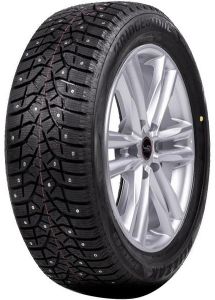
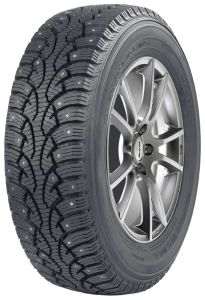
Bridgestone winter technology: Blizzak, Multicell and NANO PRO-TECH
The Blizzak family appeared in 1988 with one specific job to do: to replace studded tyres on the Japanese market. The car had to be held on the ice without metal studs. That brief still shapes Bridgestone's winter technology today.
The technical basis of the Nordic lines is the Multicell compound. The rubber contains microscopic open bubbles that work hydrophilically. On ice, the pressure of the tyre creates a thin film of water, and it is that film, not the ice itself, that makes the surface slippery. The bubbles draw the water away and the rubber meets the ice itself. A stud does the same job mechanically, with a metal pin.
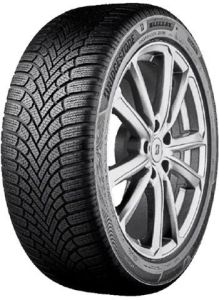
NANO PRO-TECH works at molecular level: the rubber molecules are engineered to bond better with the silica particles and to spread evenly through the compound. The manufacturer credits it with gains in fuel consumption, wet grip and wear resistance. The latest generation, the Blizzak 6, arrived in 2024 on the ENLITEN platform, which Bridgestone positions as EV-ready.
The two groups of studless tyres differ in compound hardness and sipe density. Softer rubber follows the ice surface more closely, but it wears faster on warm tarmac. No technology cancels that trade-off.
The model range by intended use
The choice starts with the question of what roads the car will be driven on, not with a model number. Central European type tyres are built for cold, wet tarmac and for higher speeds, and their speed ratings in the catalogue run up to W. The Nordic lines are softer and intended for packed snow and ice, which is exactly why the highest speed rating on the Blizzak Ice is H, while the DM-V3 is mostly T. On a powerful car they may simply not meet the manufacturer's requirements. So it is worth checking the speed rating and load index before choosing a model, not after.
| Model | Studded or studless | Segment | Available diameters | 3PMSF |
|---|
| Blizzak 6 | studless | passenger car, crossover, EV (ENLITEN) | R16-R22 | yes |
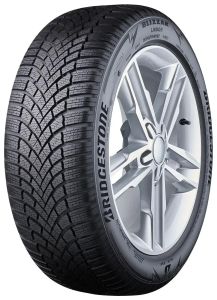
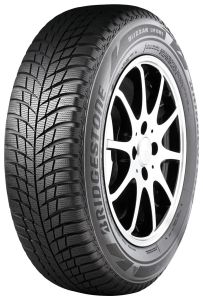
| Blizzak LM005 | studless | passenger car, SUV | R14-R22 | yes |
| Blizzak LM005 DriveGuard | studless, RunFlat | passenger car | R16-R18 | yes |
| Blizzak LM001 | studless | passenger car, SUV | R16-R21 | yes |
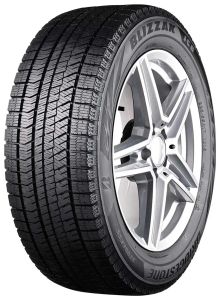
| Blizzak Ice | studless, Nordic | passenger car | R14-R19 | yes |
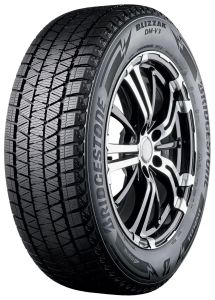
| Blizzak DM-V3 | studless, Nordic | SUV, 4x4 | R15-R22 | yes |
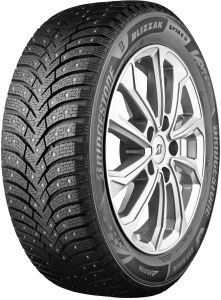
| Blizzak Spike 3 | studded | passenger car, SUV | R15-R20 | yes |
| Blizzak Spike 02, Spike 02 SUV | studded | passenger car, SUV | R15-R19 | yes |
| Noranza 001, Noranza 001 Van | studded | passenger car, van | R15-R18 | yes |
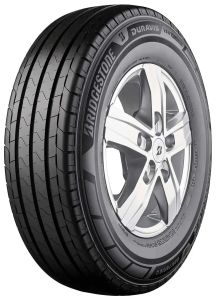
| Duravis Van Winter | studless, C | commercial vehicles | R15-R17 | yes |
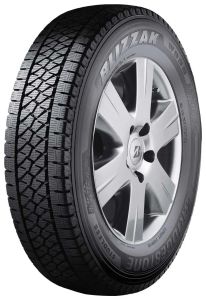
| Blizzak W810, Blizzak W995 | studless, C | commercial vehicles | R15-R17 | yes |
The only studded options in this range are the Spike and Noranza lines, and a particular size may not exist in them at all. RunFlat is covered mainly by the Blizzak LM001 and the separate LM005 DriveGuard version, but the factory homologation (OE) marking is only on some of the sizes. If the old tyre had one on the sidewall, look for the same marking. The entire winter range carries the 3PMSF symbol, so it meets Latvia's winter requirements.
The load index deserves as much attention as the size itself. SUVs and electric cars are heavy: in the passenger car lines the indices reach 116-117, and in the commercial lines up to 121. If the car manufacturer calls for XL, a standard casing is not a substitute. The same goes for RunFlat: on a car with no spare wheel, an ordinary tyre changes what happens after a puncture.
What the independent tests show
In the ADAC 2025 winter tyre test in size 225/40 R18, the Blizzak 6 took third place out of 31 tyres tested, with an overall score of 2.2. The individual scores were: dry surface 2.1, wet surface 2.1, snow and ice 2.5, wear 1.9, noise 3.3. Noise is therefore its weakest result.
Behind the scores there is a deliberate trade-off. According to the Tyre Reviews summary of the same test, the braking distance on wet concrete was 36.5 metres, and no other tyre in the test stopped shorter. On ice the result was 16.2 metres, or seventh place. A projected tread life of 57,700 kilometres put it twelfth, while the best result in the test was 76,500 kilometres. In the Auto Bild 2025 winter tyre test in size 235/50 R19 the same tyre won, with the best snow braking at 27.9 metres.
In the Tyre Reviews database the older Blizzak LM005 has been tested 45 times with 19 wins; its strength is wet braking, its weak points ice and wear. The Nordic lines fare more modestly in Scandinavian tests. In the Vi Bilagare 2023 test the Blizzak Ice came fifth out of eight tyres and braked 7.2 percent longer on wet than its premium rivals, though it was quiet. The DM-V3 finished sixth out of eight in the Vi Bilagare 2022 SUV test. The studded Blizzak Spike 3, on the other hand, took second place in the Vi Bilagare 2024 test, braking 24 percent shorter on ice than its premium rivals.
Which models suit Latvian conditions
If most winter kilometres are covered in Riga and on maintained main roads with salt and slush, the choice is the Blizzak 6 or the LM005. Outside the city, where the wheels meet packed snow and icy gravel roads every day, a Nordic tyre makes more sense: the Blizzak Ice for a passenger car, the DM-V3 for an SUV. The soft compound wears faster in a mild March and on long runs over dry tarmac, so it is a poor choice for a car covering high motorway mileage.
There are also cases where this brand is not the right answer. Anyone who deliberately wants studs for unmaintained country roads may find Bridgestone's studded range too narrow, and it is wiser to look at brands with a full studded line-up. Anyone driving mostly on bare ice should also bear in mind that in Scandinavian tests the brand's Nordic tyres usually finish mid-field or lower. There is no point buying the Blizzak 6 for quietness, because noise was its lowest score in the ADAC ratings. And a passenger car Blizzak is no substitute for a C-marked tyre on a loaded van.
The formal requirements are the same for everyone. CSDD states that from 1 October 2024, during the winter period, which runs from 1 December to 1 March, vehicles with a gross weight of up to 3.5 tonnes must have tyres carrying the mountain and snowflake symbol. The minimum tread depth is 4 millimetres, and studs are allowed from 1 October to 1 May. All-season tyres meet these requirements if they carry the same symbol, but in the cold and on ice they are no substitute for a dedicated winter tyre.
The dates winter tyres become mandatory, and when it is worth fitting them earlier, are covered separately - when to fit winter tyres.