
Bridgestone: ice grip starts in the rubber compound
Multicell - pores that soak up water from ice
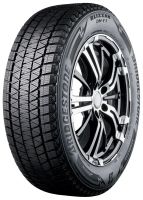
Ice itself is not slippery. What is slippery is the thin film of water that tyre pressure and friction melt on its surface. In Bridgestone Nordic winter tyres that film is removed by the rubber itself rather than by the tread pattern: the Multicell compound is porous and hydrophilic, its tiny pores absorb the water and carry it away from the contact patch so the tread blocks can reach the ice itself.
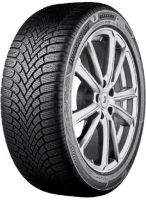
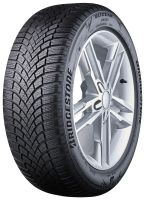
The non-studded Blizzak Ice for passenger cars and Blizzak DM-V3 for SUVs are built on this principle. The manufacturer developed Blizzak Ice for the harshest European winters, and DM-V3 carries the same Multicell solution over to heavier and taller vehicles. Blizzak 6, intended for the Central European winter, works differently: there the main job is done by the tread pattern and the ENLITEN platform, tuned for snow and wet asphalt.
Bridgestone tyre lines for winter, summer and commercial vehicles
For passenger cars the Blizzak name covers three different lines: the Central European touring line (LM001, LM005 and their successor Blizzak 6), the Nordic non-studded Multicell line and the studded Blizzak Spike family. For passenger cars the summer range rests on two families: Turanza for comfort and low rolling resistance, Potenza for handling and speed. Turanza 6 combines ENLITEN with the TECHSYN compound, while at the sporty end there are both Potenza Sport and the newer Potenza Sport EVO, both from R17 inches upwards.
Alongside them are Dueler and the premium-class Alenza for SUVs, Duravis for commercial vehicles with the C marking, Ecopia for low rolling resistance and the all-season Turanza All Season 6 together with its predecessor Weather Control A005 EVO. Diameters run from R14 to R23, RunFlat comes in both the factory RFT and the DriveGuard versions, and some tyres carry the car makers approval markings *, AO, MO or RO. What they mean is explained on the tyre markings page. Most tyres in the range are marked as suitable for electric cars.
| Model | Season | Studs | Diameters |
|---|---|---|---|
| Blizzak 6 | winter | non-studded | R16-R22 |
| Turanza 6 | summer | - | R16-R22 |
| Blizzak LM005 | winter | non-studded | R14-R22 |
| Turanza T005 | summer | - | R15-R22 |
| Potenza Sport | summer | - | R17-R23 |
| Turanza All Season 6 | all-season | - | R16-R21 |
| Blizzak LM001 | winter | non-studded | R16-R21 |
| Blizzak DM-V3 | winter | non-studded | R15-R22 |
| Blizzak Ice | winter | non-studded | R14-R19 |
| Potenza S001 | summer | - | R17-R21 |
First on ice in Finland, wet braking in Germany
In the Tekniikan Maailma and UTAC 2025 winter test (205/55 R16, Volkswagen Golf, 14 tyres) Blizzak Spike 3 stopped on ice from 50 km/h in 32.3 metres - the shortest distance in the whole test, including against the non-studded tyres, while the weakest studded rival, Continental IceContact 3, needed 42.5 metres. The acceleration time on ice was also the best in the test - 4.6 seconds.
The same test also shows where Spike 3 falls behind. On dry asphalt the braking distance was 33.4 metres, 14th place out of 14. Cabin noise scored 6 points out of 10, which placed it 13th. On wet asphalt the result was 36.3 metres, two metres more than the best studded tyre. In the overall studded tyre ranking Spike 3 finished fourth.
The non-studded Blizzak 6 took fourth place in the Auto Bild 2024 test in size 205/55 R16 with a score of 1.5 "gut" - Auto Bild grades on the German scale, where a lower number is better. The only criticism was the high price. In the 2025 test in size 215/55 R17 it shared seventh place out of twelve with 2.3: its weakest side was named the long wet braking distance, 49.0 m from 100 km/h, and its strongest braking on snow, 23.1 m from 50 km/h.
Which driver Bridgestone suits best
- For icy winters without studs - Blizzak Ice from R14 to R19, and for larger and heavier cars Blizzak DM-V3 from R15 to R22. Multicell is meant for exactly these conditions.
- If you need studs - Blizzak Spike 3 is in our range from R15 to R20, next to the older Spike 02 family. In Latvia studded tyres are allowed from 1 October to 1 May. Studs come at a price: more noise and a longer braking distance on dry asphalt, but on ice they pay off.
- For a wet and snowy city winter - Blizzak 6, while the previous-generation LM005 stays in the range for smaller rims too, starting from R14.
- For summer - Turanza 6 for comfort and low rolling resistance, Potenza Sport or Sport EVO for more powerful cars. None of the winter lines is suitable for summer.
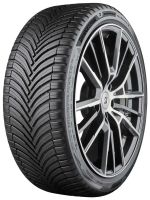
- For the whole year - Turanza All Season 6 with the 3PMSF marking, so in Latvia it is valid for the winter period too.
If winter grip decides the choice, the Bridgestone range stands out on ice with Blizzak Ice, Blizzak DM-V3 and the studded Blizzak Spike family, and the winter tyre section carries all three passenger-car Blizzak lines - the studded one and both non-studded ones, while commercial vehicles have their own C-marked Blizzak models.