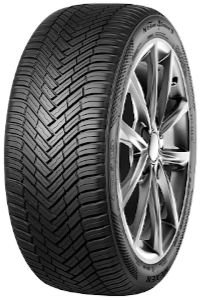
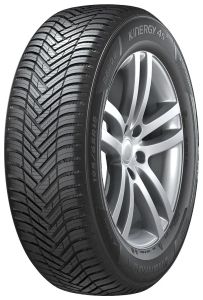
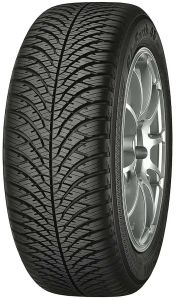
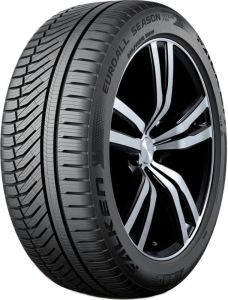
Are all-season tyres legal in a Latvian winter?
They are, as long as the tyre's sidewall carries the 3PMSF symbol. M+S on its own is no longer enough for winter. Paragraph 219 of the Road Traffic Regulations requires passenger cars with a gross vehicle weight of up to 3.5 t to have tyres designed for winter conditions from 1 December to 1 March. What counts as a winter tyre is defined in Cabinet Regulation No. 295: since 1 October 2024 it has to be marked with the three-peak mountain snowflake symbol. M+S is described there separately, as a tyre for mud and fresh or melting snow.
So the ban applies not to all-season tyres as such, but to tyres that carry only M+S. That is how CSDD explained it to the LSM news portal. M+S-only tyres may be used from 1 March to 1 December; in winter they will not pass the roadworthiness test, and unsuitable winter tyres can earn you a fine of 30 euros, LV portāls reports.
What sets the two symbols apart is how a tyre gets them. The manufacturer applies M+S itself, without any test. 3PMSF, the three-peak mountain snowflake, has to be earned in a snow test under UN Regulation No. 117: on snow, a passenger car tyre must achieve a result at least 1.07 times better than the Standard Reference Test Tyre (SRTT). On the sidewall, 3PMSF looks like the outline of a mountain with three peaks and a snowflake inside. In our catalogue it is shown by the 3PMSF mark on the product page for each size and on the tyre cards in size search results. Not every all-season tyre on the market carries this symbol; some still come out with M+S only. If the tyres will be driven in winter as well, choose a size with the 3PMSF mark.
One more limit is 4 mm: that is how much tread the same Cabinet Regulation No. 295 requires in the winter period.
All-season, summer or winter tyres
An all-season tyre is a compromise, and tests show fairly precisely where it loses out and where it gains. In 2023 the Swedish National Road and Transport Research Institute VTI and the insurer Folksam jointly compared 14 all-season tyres with summer and Nordic winter reference tyres, and the percentages in the table come from that test. The metres and decibels come from Vi Bilägare's 2024 test, in which the CrossClimate 2 took on studless winter tyres.
| Conditions | All-season tyre | Summer tyre | Studless winter tyre |
|---|
| Dry braking | Braking distance 5-30% longer than the summer reference tyre | Still unbeaten in the dry | Soft rubber and lots of sipes; the blocks flex on warm tarmac |
| Wet braking | 5-30% longer than the summer tyre; the CrossClimate 2 stopped in 27.49 m, better than every winter tyre in the test | The summer reference tyre stops shorter | Best winter tyre in the wet: 37.55 m |
| Snow | For winter-approved tyres, braking distance is 10-30% longer than for a Nordic winter tyre, 15% on average | Not allowed from 1 December to 1 March | Best of the three |
| Ice | Braking distance 25-50% longer, just over 30% on average; CrossClimate 2: 18.39 m | Not designed for it | Best studless tyre: 10.69 m |
| Wear | One set covers the whole year's mileage; ÖAMTC/ADAC 2025 projects around 50,000 km for most of the well-rated tyres | Works half the year, sits idle the other half | Works half the year, sits idle the other half |
| Noise | The CrossClimate 2 was the loudest in the test, 72.9 dB | Depends on the model; check the EU tyre label | Studless winter tyres are quieter, 71.5 dB for comparison |
Ice is what decides a Latvian winter. On snow the best all-season tyres come close to a Central European winter tyre, and in Auto Bild's 2025 test the winter tyres stayed ahead mainly in snow braking, and only slightly at that. On ice the gap is large: 18.39 m against 10.69 m. On wet tarmac and in sleet the picture is reversed: all-season tyres work best precisely in Latvia's damp transitional seasons.
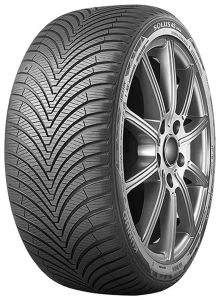
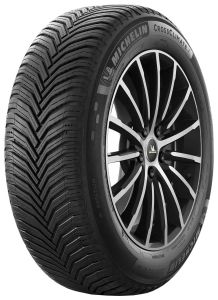
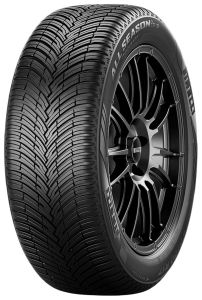
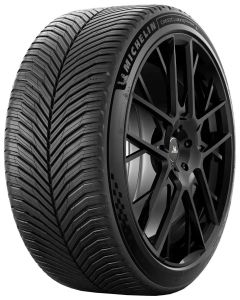
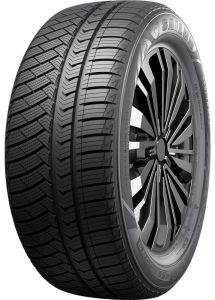
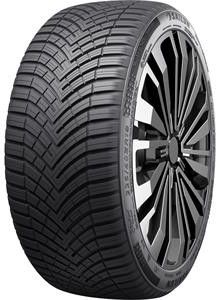
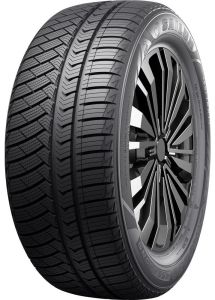
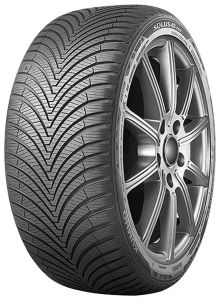
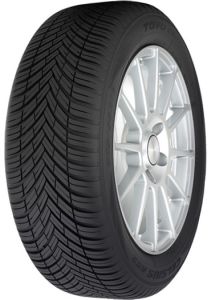
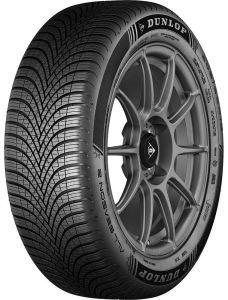
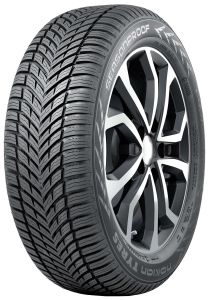
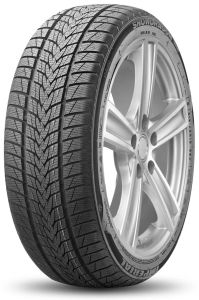
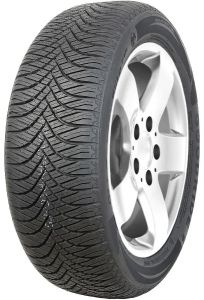
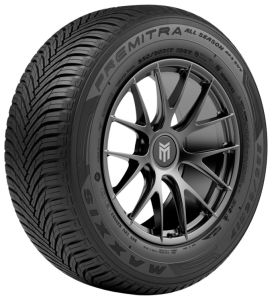
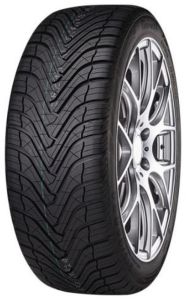
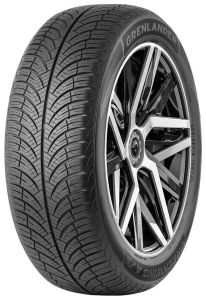
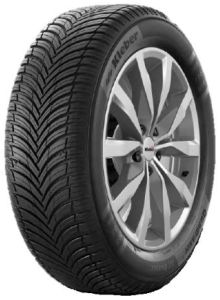
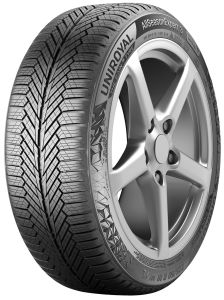
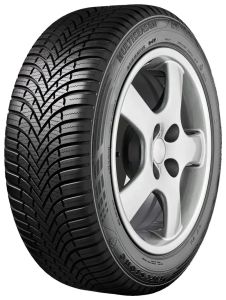
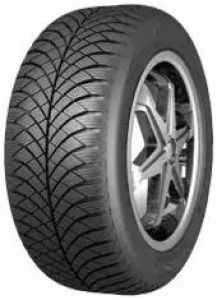
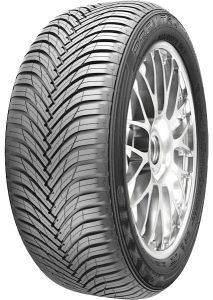
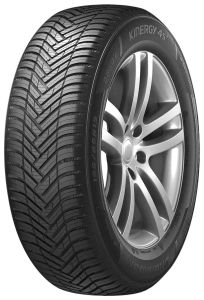
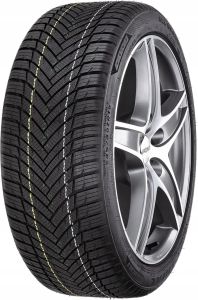
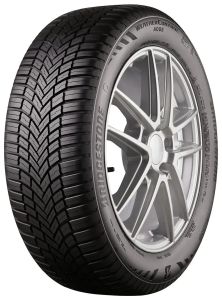
An all-season tyre is easy to recognise by its tread: it is V-shaped, with grooves that widen towards the shoulder, and it has more sipes than a summer tyre but fewer than a winter tyre. The compound, with a higher silica content, stays soft even below about +7 °C, where summer rubber is already losing grip. Michelin calls its first CrossClimate "the first summer tyre approved for winter use", and the family still leans towards the summer side.
Who all-season tyres suit and when to choose two sets
The buyer profile is simple: low annual mileage, mostly city driving, little snow and the option of leaving the car parked on the worst days. In practice it looks like this:
- City car. A compact or family car, a small SUV or an electric car that in winter drives on streets cleared and gritted first thing in the morning.
- Low mileage. As a guide, no more than 10,000-15,000 km a year.
- Nowhere to store a second set. No more changing tyres twice a year and no pile of wheels in the corner of the garage.
- Second car in the family. On an icy morning it can simply stay parked.
Ordinary passenger car all-season tyres suit electric cars; just check the load index, because a heavier car often needs the XL version, and the all-season range offers it in many sizes. Tyres designed specifically for electric cars are in the electric vehicle tyres section, crossovers have a wider choice in the SUV tyres section, and for vans there are all-season models in C-class sizes as well.
Two sets are the better choice if in January and February you have to drive on rural or regional roads every day in any weather, if you regularly run into black ice or packed snow, or if you often cover long distances on main roads in winter, including at night. For a driver like that, winter tyres are the right fit in winter: studless or studded, both are far safer on ice than an all-season tyre. Road safety expert O. Irbītis reckons in an LSM interview that from about 60,000 km a year, separate seasonal sets can work out cheaper. All-season tyres are usually not the right choice for a sports car: on dry tarmac, that kind of car gets its margin of precision from summer tyres paired with a winter set. We explain when to fit the winter set and when to take it off in our article When to fit winter tyres.
The most popular models and what the tests say about them
In this segment the brand and model matter more than elsewhere. In ADAC's 2026 test (185/65 R15), eight of the 16 tyres were not recommended, and some were of little use on snow and ice even though they had 3PMSF on the sidewall. The symbol is the legal minimum, not a mark of quality. All of these tests use a school-style grading scale, where a lower number means a better result.
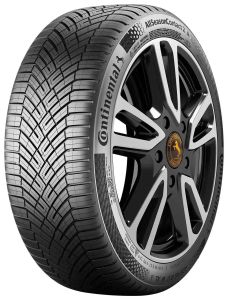
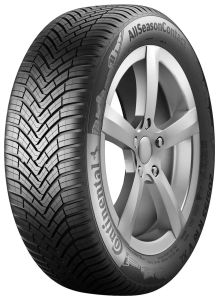
- Continental AllSeasonContact 2. The most consistent in the tests: the only tyre rated "gut" in ADAC 2026 (2.3), joint first place in ÖAMTC/ADAC 2025 (2.3), second place in Auto Bild 2025 (1.2). It had the shortest wet braking of all (ADAC 2025: 31.3 m), but its projected mileage is lower than that of the Michelin and Bridgestone tyres (Auto Bild: 48,650 km).
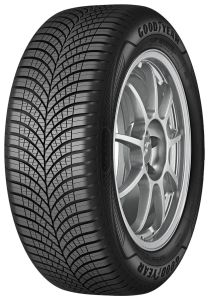
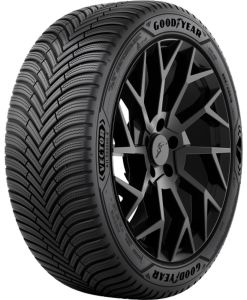
- Goodyear Vector 4Seasons Gen 3. Shared first place with the Continental in ÖAMTC/ADAC 2025, and in the ADAC 2025 data it had the lowest wear, with a projected mileage of around 68,000 km; in the dry it stopped in 42.8 m, while the best result was 38.0 m. In the smaller 185/65 R15 size it scored 3.1. Some sizes come with SealTech, which according to Goodyear seals tread punctures of up to 5 mm.
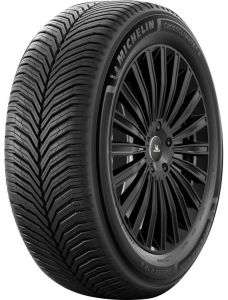
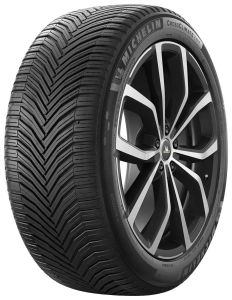
- Michelin CrossClimate 3 and CrossClimate 2. In Auto Bild's 2025 measurements the CrossClimate 3 had the shortest braking distance on snow (22.6 m) and the longest projected mileage (64,050 km), but it fell behind in the wet: 49.0 m against the Continental's 44.9 m. A year later, in size 225/45 R17, Auto Bild 2026 gave it 1.5. The CrossClimate 2 is still on sale and scored 2.7 (ÖAMTC/ADAC 2025) and 2.6 (ADAC 2026).
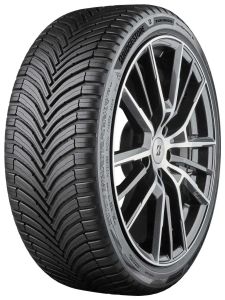
- Bridgestone Turanza All Season 6. In the Auto Bild 2025 test it had the shortest dry braking (38.1 m), was practically level with the Continental in the wet (45.0 m) and slightly weaker on snow (25.8 m); ÖAMTC/ADAC 2025 grade 2.5. The tyre is designed for 16-21 inch rims, so it does not come in 185/65 R15.
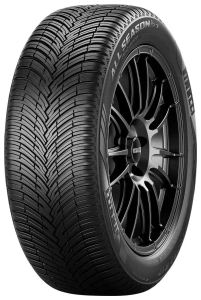
The Auto Bild 2025 test was won by the Pirelli Cinturato All Season SF3 with 1.1. Results change with the size, so look for a test in your car's size.
Wear, tread depth and when to replace them
An all-season tyre wears all year round, and in winter it stops meeting the requirements once the tread drops below 4 mm, well before the summer limit of 1.6 mm. Under Cabinet Regulation No. 295, 3.0-4.0 mm in the winter period is a grade 2 defect, and anything below 3.0 mm is grade 3. CSDD warns that a tyre with 5-6 mm at the start of the season may not stay above the minimum for the whole winter. Replace an all-season tyre when 4 mm is left. If your mileage is high, a set bought in spring can wear down to that limit by late autumn, so measure the tread before 1 December.
At a seasonal tyre change the fitter spots uneven wear, but with all-season tyres that visit never happens. On a front-wheel-drive car the front tyres wear faster, so swap the front and rear wheels from time to time, for example at a service. A V-shaped tread has a set direction of rotation, so keep each wheel on the same side of the car when you move it.
Fit four identical tyres to the car. Cabinet Regulation No. 295 bans mixing tyres intended for different uses on one axle, for example one with 3PMSF and one without, so do not pair an all-season tyre with a summer or winter tyre on the same axle. The load index and speed rating must be no lower than what the car manufacturer specifies: you will find the figures on the sidewall of your old tyres, on the sticker in the driver's door frame, in the owner's manual or on the fuel filler cap. The sidewall also carries the DOT code, whose last four digits show the week and year of manufacture, and rubber hardens with age even when there is still plenty of tread left. The other markings are explained on the tyre markings page.
If the tyres carry 3PMSF and the tread stays above 4 mm, one set covers every season and there is nothing to change on 1 December.