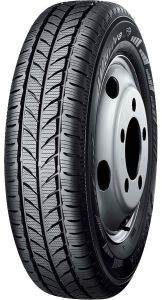
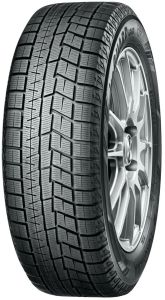
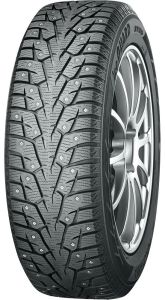
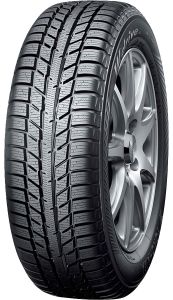
The philosophy and technology behind Yokohama winter tyres
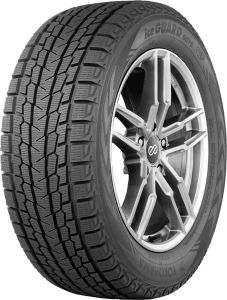
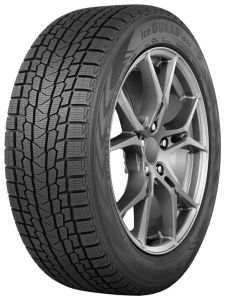
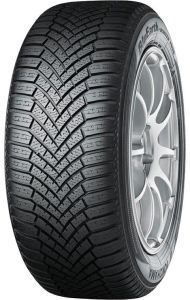
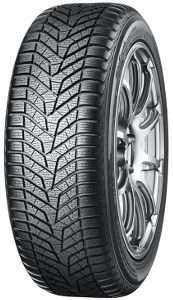
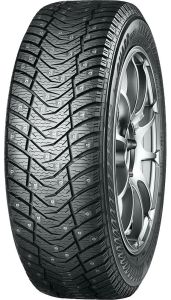
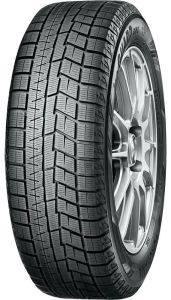
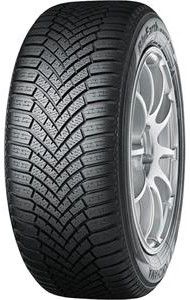
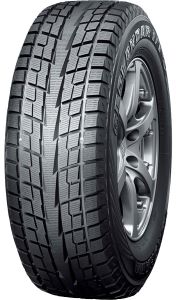
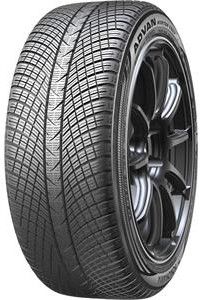
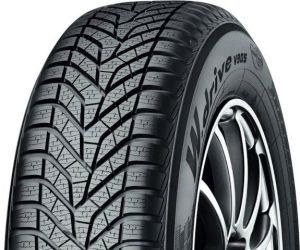
Both winter families come from Japan's Yokohama Rubber, and they are not variations on one model. The difference starts in the compound, not in the tread pattern. In its release on the Ice Guard iG60 the manufacturer names three elements. Absorptive micro balloons dispersed through the rubber soak up the film of water on the ice surface. The second is a higher silica content combined with a reactive polymer, the third is Orange Oil-S, an orange peel oil component that keeps the rubber soft even as it ages naturally. The tread of that same tyre is asymmetric: the inner side is designed to work on ice and the outer side on snow, with Double Micro Grooves and Quattro 3-D Dimple Sipes. The BluEarth Winter V906 is described differently in the manufacturer's catalogue - a Super rich-silica compound, a V-shaped groove to clear water and snow, and widely spaced 3-D sipes. For the studded iG65, Yokohama cites a directional tread and, against its predecessor the IG55, a higher stud count with a new stud-hole layout that places the studs closer to the centre of the tread. The manufacturer's own catalogue calls the Ice Guard iG53 a Nordic Friction Tyre outright, and that label describes the tyre's job more precisely than the model number does. These are all manufacturer claims, not independent measurements.
The range by intended use
The table sorts the range by what each tyre is really built for. The diameter limits show how widely a model covers factory wheel sizes: the bulk of the range sits in the R17-R21 band, though the small R13-R15 sizes are still available in the Ice Guard iG60 line.
| Model | Studs | Segment | Available diameters | 3PMSF |
|---|
| BluEarth Winter V906 | studless | passenger car | R15-R23 | yes |
| BluEarth Winter V906 SUV | studless | SUV, crossover | R16-R23 | yes |
| BluEarth Winter V905 | studless | passenger car, previous generation | R15-R22 | yes |
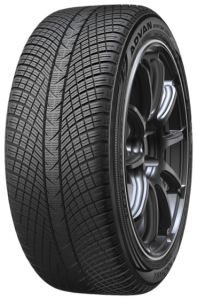
| Advan Winter V907, V907A | studless | UHP passenger car, EV | R19-R22 | yes |
| Ice Guard iG65 | studded | passenger car, SUV | R15-R22 | yes |
| Ice Guard IG55 | studded | passenger car and SUV, older generation | R16-R21 | yes |
| Ice Guard iG60, iG60A | studless | passenger car | R13-R20 | yes |
| Ice Guard iG53 | studless | passenger car, city driving | R15-R21 | yes |
| Ice Guard G075 SUV | studless | SUV, off-roader | R15-R23 | yes |
| W.drive WY01 | studless | commercial vehicles, C type | R14-R17 | yes |
In practice the most important difference between the two families is the speed rating. The Ice Guard iG65 is T in every size, the iG60 and G075 SUV are mostly Q with a few H sizes, and the iG53 range covers H and T. The BluEarth Winter V906 runs from H to W, while the Advan Winter V907 stays at V and W. If your car maker calls for a higher rating, a Nordic-type tyre simply will not do.
A few things the table does not show also change the decision. RunFlat is rare in this range and available only in selected Ice Guard iG60, iG60A and BluEarth Winter V905 sizes, so if your car needs RunFlat, start the search with that filter. Manufacturer homologation, the OE marking, is almost absent here, and the only exception in the range is the Mercedes MO1A on the Advan Winter V907A. More than half the sizes have XL reinforcement. The highest load index in the range is 121, offered by the Ice Guard G075 SUV and the commercial W.drive WY01. For electric cars and heavy SUVs that figure is the most important filter of all: the battery pack adds weight, so the load index or XL construction specified by the car maker has to be respected. Alongside the newer models the shelf still holds the previous generation: W.drive V903, W.drive V902B and the off-road Geolandar I/T-S G073.
What independent tests show
In tests Yokohama winter tyres usually land in the middle of the field rather than on the podium. In the 2024 ADAC 17-inch test, in size 215/55 R17, the BluEarth Winter V906 finished 8th out of 16 tyres: dry braking 43.8 m, wet braking 35.1 m, but its projected mileage of 35,700 km and abrasion of 95.0 mg/km/t were the worst of every tyre tested. Two years earlier, in the ADAC SUV test in size 215/60 R16, the same tyre came fourth and earned an ADAC recommendation. In the 2021 Auto Bild test, in size 205/55 R16, the V906 was left in 14th place out of 22 tyres, its weakest result being the wet braking distance of 56.1 m.
The studless Ice Guard side is well summed up by the 2022/2023 Tyre Reviews test with a VW Golf 8: the iG53 won snow braking at 15.37 m and stopped on ice in 10.97 m, but in the wet (38.72 m) and in the dry (49.49 m) its braking distance was the longest of the nine tyres tested. Overall it took 5th place. The studded iG65 placed 6th out of eight in the 2018 studded tyre test. Where the line between the two families runs is shown by the 2025 Teknikens Värld test in size 235/45 R18: in aquaplaning the Central European type tyres held on to 75-77 km/h, the Nordic studless ones 55.7-64.6 km/h. On ice the verdict was reversed. The testers judged the grip of the Central European group insufficient, while the most balanced performance came from the Nordic friction tyres.
Which models suit Latvian conditions
For vehicles with a gross weight of up to 3.5 t, winter tyres are compulsory in Latvia from 1 December to 1 March, as laid down in clause 219 of the Road Traffic Regulations. The CSDD announcement of 25 September 2024 states that from the 2024/2025 season onwards only tyres carrying the three-peak mountain snowflake marking are valid during the winter period, and the Yokohama winter range meets that requirement in every available size. BluEarth Winter is the right choice for gritted motorways and city streets. If the day starts on an icy country road, Ice Guard is the family to pick: the studded iG65 or the studless iG60 and iG53.
The EU wet grip class shows that difference plainly: in the manufacturer's catalogue the BluEarth Winter V906 is B-C, while the Ice Guard iG53 and iG60 are E. That is the price of the performance on ice. Check the class for your particular size on the size card, because it varies within a single model.
When this range is not the right choice:
- A factory OE marking. If the car maker requires a specific homologation, the Yokohama winter range will not cover it in most cases.
- High annual mileage. The V906 is a weak candidate here, because wear was exactly its worst result in the 2024 ADAC test.
- RunFlat. This requirement narrows the choice to a handful of Ice Guard iG60, iG60A and BluEarth Winter V905 sizes.
- A test winner. In the tests mentioned above the top places went to the Continental VikingContact 7 and IceContact 2; in both families Yokohama is a predictable mid-field finisher.
The dates winter tyres become mandatory, and when it is worth fitting them earlier, are covered separately - when to fit winter tyres.