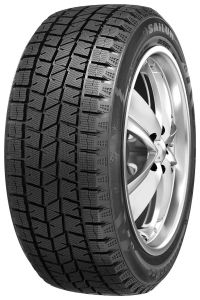
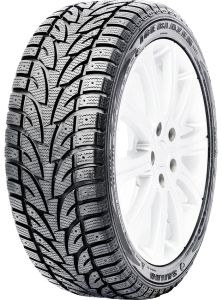
How Sailun builds its winter tyres
Sailun is a Chinese manufacturer, and its European winter range runs in two directions. The Alpine lines are meant for a Central European kind of winter on well-maintained tarmac, while Arctic and WST are made for a northern winter with ice and packed snow. The northern models are developed in the far north of Finland, near Muonio some 200 km north of the Arctic Circle: snow, slush, ice and a frozen river, temperatures from minus 20 to plus 5 degrees, and the test runs use both combustion-engine and electric cars (Tyre News).
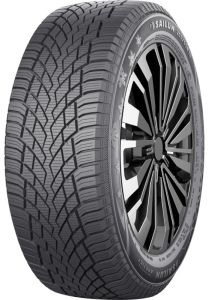
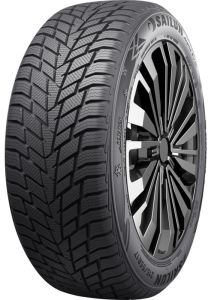
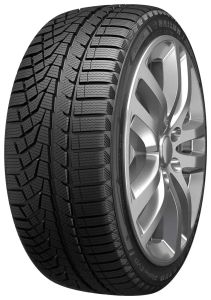
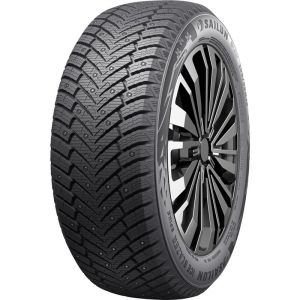
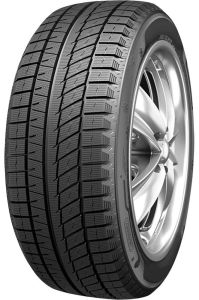
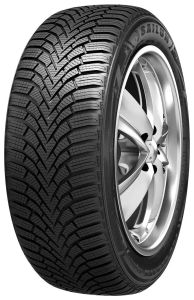
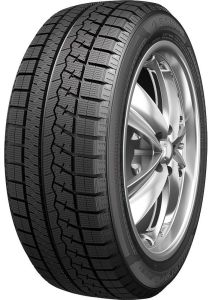
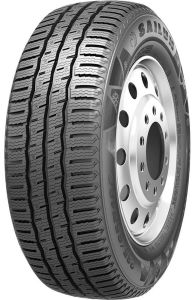
Technology names say nothing on their own, but there is specific engineering behind them. The manufacturer describes the Ice Blazer Alpine EVO 2 as having a high-silica compound, angular Snow Grip shoulder blocks for deep snow, HD Sipe siping (30 per cent more 3D sipes than the previous generation) and Hydrolink directional grooves that channel away water and slush. In the Arctic EVO tread the main grooves are L-shaped and those in the shoulder blocks are X-shaped, so that the tyre throws snow out of the grooves by itself. In the cold the WST 3 compound keeps its flexibility, and the saw-tooth edges of the blocks bite into snow and ice. On the commercial-vehicle Endure WSL1 the reinforced construction and wide contact patch increase load capacity by more than 20 per cent according to the manufacturer's figures.
The model range by intended use
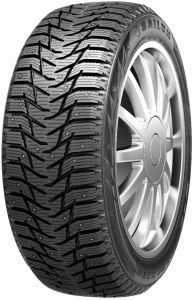
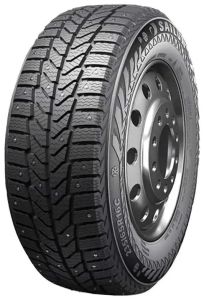
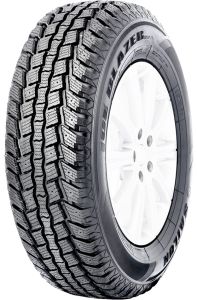
In the shop the first decision is almost never the model. You start by settling whether the car needs studs: a metal stud bites into ice where rubber no longer grips. A studless tyre gets its grip from a compound that stays flexible in the cold and from a dense network of sipes, and it runs more quietly on clear tarmac. Only the WST lines and the commercial Commercio ICE can be studded; the rest of the range is studless. Only after that come the vehicle type, the diameter and the speed rating. The table sums up the main lines; the range also includes individual sizes from older Ice Blazer generations.
| Model | Studded or studless | Segment | Available diameters | 3PMSF |
|---|
| Ice Blazer WST 3 | Studdable, many sizes come already studded | Passenger car, SUV | R13-R22 | Yes |
| Ice Blazer WST 2 LT | Studdable | Passenger car, SUV | R17-R20 | Yes |
| Commercio ICE | Studdable | Commercial vehicles (C marking) | R14-R17 | Yes |
| Ice Blazer Alpine EVO 2 | Studless (friction) | Passenger car, SUV, EV | R16-R22 | Yes |
| Ice Blazer Alpine EVO 1 | Studless (friction) | Passenger car, SUV | R16-R20 | Yes |
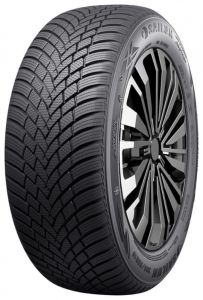
| Ice Blazer Alpine 2 | Studless (friction) | Passenger car, EV | R13-R17 | Yes |
| Ice Blazer Alpine+ | Studless (friction) | Passenger car | R13-R17 | Yes |
| Ice Blazer Arctic EVO | Studless, RunFlat sizes available | SUV, large passenger cars | R18-R22 | Yes |
| Endure WSL1 | Studless (friction) | Commercial vehicles (C marking) | R14-R17 | Yes |
The speed rating rules out more options than you would expect. In our range the WST 3 comes in Q, S and T, so for a car whose technical data calls for H or above there is no studded option in this brand; H and higher ratings are covered by the Alpine lines and the Arctic EVO. The size, load index and speed rating you need are on the sticker in the driver's door aperture, on the fuel filler flap or in the car's handbook. For a heavy crossover or an electric car the XL marking matters: the WST 3 covers load indexes up to 117, the Alpine EVO 2 and Arctic EVO up to 116 and the WST 2 LT up to 125, while on the commercial side the Commercio ICE and Endure WSL1 go up to 121.
There are two details the model name does not tell you. The first is the EU label wet grip class, which differs between sizes of the same model: for Alpine EVO 2 and Alpine 2 sizes it reaches A and B, while for WST 3, Arctic EVO and Alpine+ sizes it tends to be C, D or E. Here the label of the particular size matters more than the reputation of the line. The second is RunFlat: only the Arctic line has such sizes in the range, so a car with factory RunFlat equipment may not find the size it needs in this brand.
What the independent tests show
The older Ice Blazer generations scored badly, and there is no point in glossing over it. In the Swedish Vi Bilägare test of 2019 the studded WST 3 in size 225/50 R17 came last of eight tyres with a "not recommended" verdict, and the tyres started shedding studs within the first 80 km; the Tyre Reviews overall score for the model is 4.6 out of 10. In Auto Bild's 2024 braking test the Alpine+ in size 205/55 R16 finished 44th out of 55, with a braking distance 19.1 per cent longer than the premium class and 15.3 per cent longer than the mid-range class (Tyre Reviews).
The latest generation performs differently. In Auto Bild's 2026 test the Ice Blazer Alpine EVO 2 in size 245/45 R19, up against Firestone, Giti, Kumho and Vredestein, was first in the group for wet braking with a score of 112.4 against a group baseline of 100; snow traction 100.6, dry handling 100.5. In size 205/55 R16 94H XL the Alpine 2 went through a twelve-discipline TÜV SÜD programme against four European winter tyres and posted the best result in five of the disciplines.
None of that proves premium level, though. In the ADAC test of 2024, in the same 205/55 R16 size, the scores were spread widely (a lower score is better): the Continental WinterContact TS 870 got 2.0, Goodyear 2.2 and Michelin Alpin 6 2.3, while at the bottom the Zeetex WH 1000 ended on 3.7 and the Winrun Winter-max A1 WR22 on 5.5. Sailun did not take part, so nobody has measured its exact place on that scale.
Who they suit in a Latvian winter and who they do not
These tyres do their job where the driving is done at moderate speeds: the daily route around town, suburban and rural roads, the family's second car, an older car and commercial vehicles for which load capacity and mileage matter more than the finer points of handling. On ice, studs are an advantage regardless of the compound class, and clause 219 of the Road Traffic Regulations permits them from 1 October to 1 May; winter tyres are mandatory for vehicles with a gross weight of up to 3.5 t from 1 December to 1 March.
- Unmaintained rural route, a long winter. The WST 3 or WST 2 LT with studs; for a van, the Commercio ICE.
- Town driving, gritted tarmac, frequent thaws. The Alpine EVO 2 or Alpine 2, whose sizes carry the highest EU label wet grip class in the range.
- Crossover or electric car. The XL marking and a load index with headroom, for example the Arctic EVO or Alpine EVO 2; an ordinary passenger-car winter tyre suits an electric car too, as long as the size and load index match.
- When something else is the better choice. For high motorway mileage in bad weather, for a heavy, fast SUV, or for a winter spent mainly on wet tarmac, it is wiser to buy less often but buy a premium set: wet braking is exactly the discipline where Sailun falls furthest behind in independent tests.
The dates winter tyres become mandatory, and when it is worth fitting them earlier, are covered separately - when to fit winter tyres.