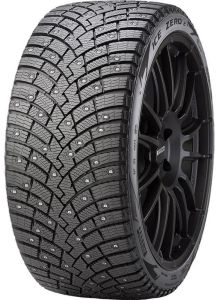
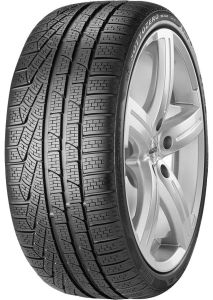
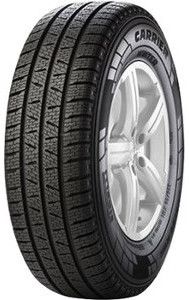
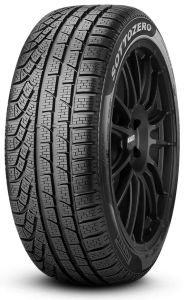
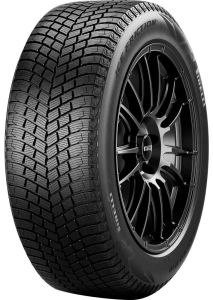
Plus two degrees, rain, and a film of water sitting on the road ahead of the wheels. There is no snow in sight, yet at this temperature a summer tyre has already gone hard and brakes poorly. Mornings like this are exactly when Pirelli winter tyres work best. Nordic studless and studded tyres are built for ice, whereas the core of the Italian range is the Central European winter tyre, made specifically for cold, wet asphalt. That brings a stiffer casing, higher speed ratings, factory homologations and a predominance of large diameters. In the catalogue this segment spans R15-R23 diameters, and almost all of it is studless; studs appear on only a few models, mainly in the Ice Zero family. Nearly every product carries the mountain and snowflake symbol, so they meet Latvia's winter requirements. The models below are split by vehicle type: Scorpion for SUVs and crossovers, Winter Sottozero and P Zero Winter for more powerful cars, Cinturato and Powergy Winter for the compact class, Carrier Winter for vans.
Pirelli winter tyres
A winter range built for cold, wet asphalt, with factory homologations, in R15-R23 diameters.
25 tyre models available
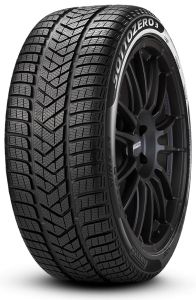

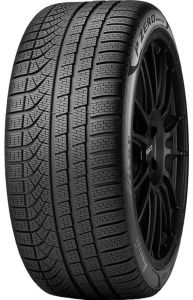
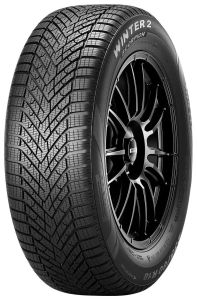
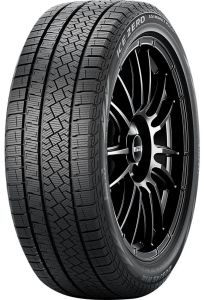
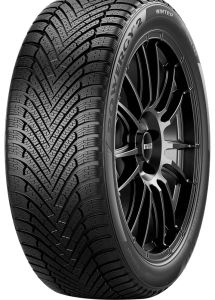
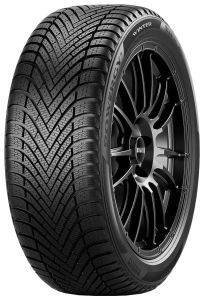
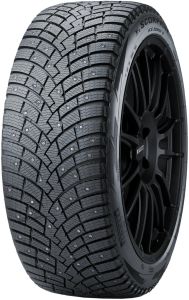
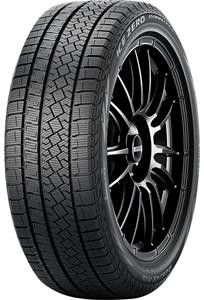
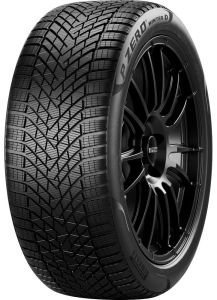
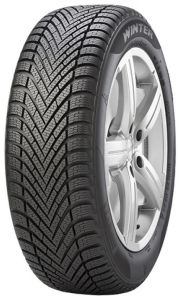
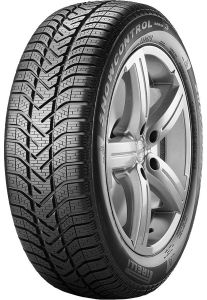
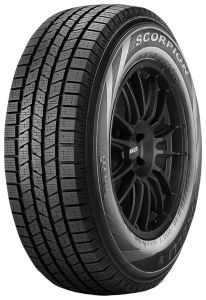
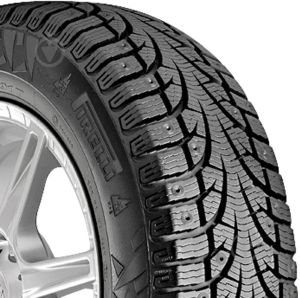
Pirelli winter tyres: construction, models and independent test results
How Pirelli builds a winter tyre and what the technology abbreviations mean
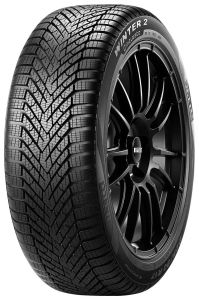
The Italian manufacturer develops most of its winter models together with car makers, and it shows in the finished tyre. The Scorpion Winter 2 was created in cooperation with Audi, Lamborghini, Maserati, Mercedes and Porsche, and according to Pirelli the Scorpion line as a whole has more than 400 original equipment homologations, over half of them for electric cars. Beyond that, it all comes down to construction. The compound stays flexible in the cold where summer rubber has already gone hard. The tread channels drain water and slush so the grooves do not clog. A dense network of 3D sipes creates thousands of tiny biting edges: in the Scorpion Winter 2 tread the manufacturer counts around 51 metres of sipes, which gives a fifth more working area in snow than the previous Scorpion Winter generation. On top of that comes the snow-to-snow principle: snow packed into the tread blocks grips the snow on the road better than bare rubber does.
The abbreviations stand for specific hardware, not cosmetic trim. PNCS is a sound-absorbing element bonded inside the tyre, and Pirelli states that it halves the noise heard in the cabin. For the ELECT version the manufacturer promises around 20 percent lower rolling resistance than a tyre without it, which for an electric car means a longer winter range. Seal Inside closes up a puncture; Run Flat lets you drive on to a garage with no air in the tyre. None of these versions is available across the whole line, so the specification has to be checked for each individual product.
The model range by application
The families are divided by vehicle type, and that line is not a suggestion. A passenger car tyre with too low a load index fitted to an SUV is a safety problem, not a saving. The table below lists the main families and what each one is built for.
| Model | Studded or studless | Segment | Available diameters | 3PMSF |
|---|---|---|---|---|
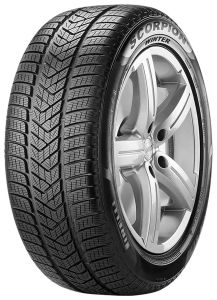
| Scorpion Winter | Studless | SUVs, crossovers, EVs | R16-R22 | Yes |
| Scorpion Winter 2 | Studless | SUVs, crossovers, EVs | R18-R23 | Yes |
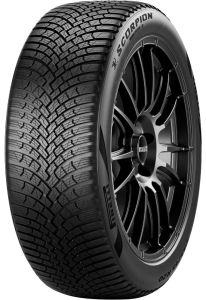
| Scorpion Winter 3 | Studless | SUVs, crossovers, EVs | R19-R22 | Yes |
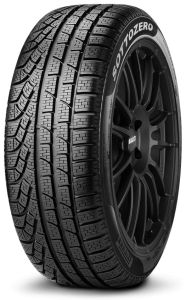
| Winter Sottozero 3 | Studless | Passenger cars, EVs | R16-R21 | Yes |
| P Zero Winter | Studless | Passenger cars, SUVs, EVs | R18-R23 | Yes |
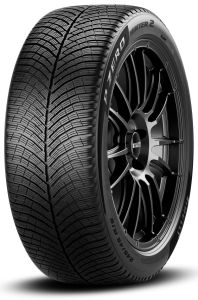
| P Zero Winter 2 | Studless | Passenger cars, EVs | R18-R22 | Yes |
| Cinturato Winter 2 | Studless | Passenger cars, EVs | R16-R20 | Yes |
| Powergy Winter | Studless | Passenger cars | R15-R19 | Yes |
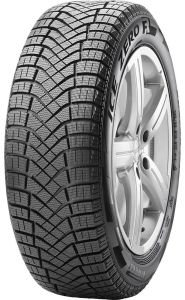
| Winter Ice Zero Asimmetrico | Studless | Passenger cars, crossovers | R15-R21 | Yes |
| Scorpion Ice Zero 2 | Studded | SUVs, crossovers | R17-R21 | Yes |
| Winter Ice Zero 2 | Studded | Passenger cars | R15-R19 | Yes |
| Carrier Winter | Studless | Commercial vehicles, C class | R15-R17 | Yes |
The generation number matters more than the brand does. Scorpion Winter, Scorpion Winter 2 and Scorpion Winter 3 sit side by side in the catalogue, as do several generations of Cinturato Winter, Winter Sottozero and P Zero Winter. The newer generation usually scores better in independent tests, so choosing an older one is a deliberate compromise. The speed rating in this segment is mostly V or H, with W appearing in the P Zero Winter, Winter Sottozero and Scorpion families; a lower rating than on the summer tyre is acceptable only if the car maker permits it.
The sidewall also needs reading for the original equipment marking: MO for Mercedes-Benz, AO for Audi, N codes for Porsche, a star for BMW, T0 to T2 for Tesla, VOL for Volvo. Pirelli explains that a marked version differs in casing, compound and dimensional precision, and that the ABS, EPC and TPMS calibration is based on the characteristics of the factory tyre. An unmarked tyre of the same model is still safe and legal, but it is not identical. Do not mix different markings on the same axle.
Another figure that must not go below the car maker's requirement is the load index. An electric car can be several hundred kilograms heavier than the same model with a combustion engine, so heavy SUVs and electric cars in practice need an XL or HL tyre. The HL marking is newer, and Pirelli introduced it precisely because of battery weight: a tyre like this carries 20 percent more weight than a standard tyre in the same size. At the highest load indexes the choice of sizes narrows.
What the independent tests show
In the Auto Bild 2025 SUV winter tyre test, in size 235/50 R19, the Scorpion Winter 2 shared fourth place in a field of twelve. On the wet handling track it was the fastest at 78.9 km/h, second in wet braking at 49.8 m and the quietest of all the tyres tested at 71.3 dB. In dry handling it came tenth, and its rolling resistance of 8.2 kg/t was high.
In the performance car group the picture changes. In the Tyre Reviews test, in size 235/35 R19, the P Zero Winter 2 took a shared first place, won all three snow measurements and was again the quietest tyre, but its rolling resistance of 8.95 kg/t was only the fifth best of six tyres.
The weakest publicly known result comes from the ADAC 2024 test. In size 205/55 R16 the Cinturato Winter 2 scored 3.9 and finished second from last, because its behaviour on dry roads pulled the overall score down despite good winter performance. The same tyre in size 215/55 R17 was mid-field and was rated as recommended. Size changes the result more than people tend to assume. For some common sizes there is no independent data at all: the ADAC 2025 test in size 225/40 R18 examined 32 tread patterns, and not one of them was a Pirelli.
Which Latvian roads these tyres suit and which they do not
On a maintained road the range works well. Cold and wet is its strong suit, and that is the most common scenario in our winter: everyday city driving and the open road. For an uncleared gravel road and steep icy climbs it is not the right tool. In the Vi Bilägare comparison the braking distance on smooth ice from 25 to 5 km/h was 9.9 m for a studded tyre, 11.06 m for a Nordic studless tyre and 14.15 m for a Central European winter tyre. In wet braking from 80 km/h the order was reversed: 26.60 m for the Central European tyre against 31.58 m for the Nordic one. That is exactly the trade-off: ice versus wet asphalt.
The Scorpion family suits an SUV, the Winter Sottozero or Cinturato a saloon, the P Zero Winter a powerful car on large rims, the Carrier Winter a van. Anyone who has to drive on ice every day is left with the Ice Zero family, but the choice there is narrow, so it is often more sensible to look at studded tyres from another brand. For an electric car it is worth looking for the ELECT version, because rolling resistance is not a strong point here. One requirement applies whatever the model: according to the CSDD, winter tyres are compulsory from 1 December to 1 March, and the minimum tread depth in the winter season is 4 mm.
The dates winter tyres become mandatory, and when it is worth fitting them earlier, are covered separately - when to fit winter tyres.
Frequently asked questions
Special tyre categories
Niche tyre segments for specific applications - from all-terrain and sports tyres to seasonal and technology-focused tyres.
What our customers say
Happy customers are our best advertisement.


Pasūtijumu saņēmu ātri - par riepām pastāstīt nevaru jo neesmu uzlicis, bet izskatās labi.
Super
Viss process un piegāde ir ļoti ātra.
Labākais riepu veikals, skaidri norādīti riepu parametri, apzīmējumi, ražošanas gads, milzīgs sortiments. Iepērkos jau 3. reizi. Noteikti iesaku. Var atrast ļoti labus akcijas piedāvājumus riepām ar pāris gadu vecāku ražošanas datumu. Ja saņemsiet riepas uz vietas bez piegādes, tad sagatavojiet skaidru naudu, jo nav karšu terminālis.
Man bija nepieciešams daudzpusīgs MICHELIN riepu komplekts. Ne visi pārdevēji Rīgā varēja to piedāvāt. "Rigas Repas" piedāvāja viszemāko cenu. Piegāde bija iespējama nākamajā dienā. Es saņēmu oriģinālu MICHELIN ziemas riepu komplektu par vislabāko cenu Rīgā. Es ļoti iesaku šo pārdevēju.
Super!
Отличный магазин покрышек, быстро , четко и по существу.
Bija labi,riepas " Greenland" kvalitāte apmierina!
Perfekti! Cena, piegāde 😎👍