From Heung-A Tire to WinGuard technology
Nexen Tire is a South Korean manufacturer. The company was founded in 1942 under the name Heung-A Tire, renamed Nexen Tire Corporation in 2000, and today its tyres reach 120 countries. On price the brand sits in the middle of the market rather than on the premium shelf, and that is reflected in its technical choices.
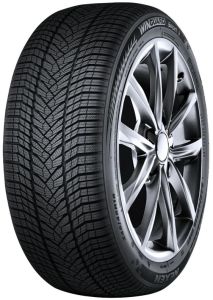
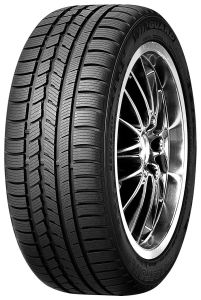
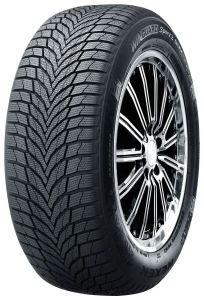
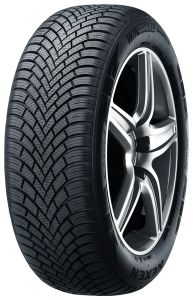
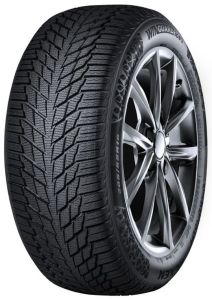
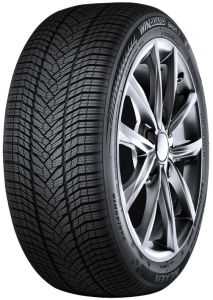
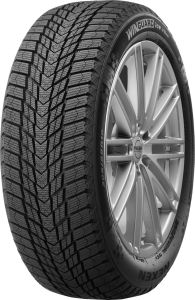
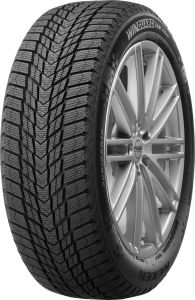
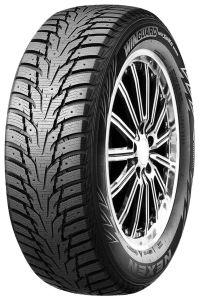
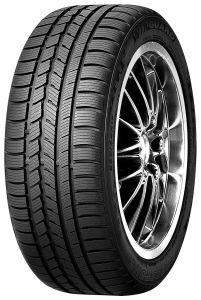
In Europe the winter range is carried by the WinGuard family, built to the Central European pattern: firmer tread blocks and a compound that stays flexible in the cold but is not as soft as in Nordic tyres. The Sport 3 has a V-shaped directional tread pattern; the manufacturer links it to grip and handling on snow-covered roads and adds that in 2025 the model won a Red Dot design award. In the Snow G3 description Nexen lists a widened shoulder block, partial grooves in the shoulder and the centre, a multi-layer sipe structure and spiral side grooves for water drainage. The Ice 3 stands at the other end: a softer compound and denser siping, so that more edges bite into the ice. There are no surprises on the technology list - it is the standard winter tyre toolkit, turned towards tarmac. In practice such a construction gives more assured handling on a wet motorway and longer mileage, but takes away part of the grip needed on slippery ice.
The model range by intended use
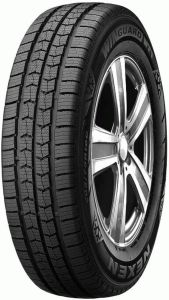
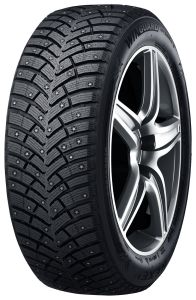
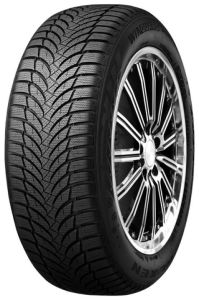
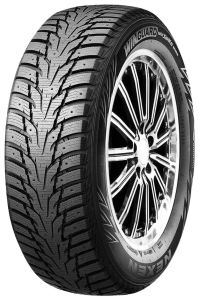
Several tyres that cannot stand in for one another share the WinGuard name, so the choice starts with the car in the workshop. The sporty UHP end is made up of the WinGuard Sport 3 and the older Sport 2 (WU7), and both also come in an SUV version: larger rims and higher speed ratings. For everyday driving there is the Snow G3 (WH21) and, before it, the Snow G (WH2), both for smaller rims. On the commercial vehicle side there is the WinGuard WT1 with a C construction marking. The Ice 3 is the softest and most densely siped studless option, while the WinSpike series stands apart, because it is the only studdable tyre in this range.
| Model | Studs | Intended for | Rim diameters | 3PMSF |
|---|
| WinGuard Sport 3 | studless | passenger car, UHP, electric car | R16-R21 | yes |
| WinGuard Sport 3 SUV | studless | SUV, crossover | R17-R21 | yes |
| WinGuard Sport 2 (WU7) | studless | passenger car, UHP | R15-R20 | yes |
| WinGuard Sport 2 SUV (WU7) | studless | SUV, crossover | R15-R21 | yes |
| WinGuard Snow G3 (WH21) | studless | everyday passenger car | R14-R16 | yes |
| WinGuard Snow G (WH2) | studless | passenger car, older generation | R14-R17 | yes |
| WinGuard Ice 3 | studless | passenger car, SUV | R14-R20 | yes |
| WinGuard WT1 | studless | vans and light commercial vehicles (C) | R14-R16 | yes |
| WinGuard WinSpike series | studdable | passenger car, SUV | R15-R20 | yes |
The diameters in the table show the typical range of a model, and the availability of a specific size changes with the stock on hand. Some things do not fit into a table at all.
- 3PMSF. Almost the whole range carries the mountain-and-snowflake symbol, yet an individual size may come without it, so it is worth checking the marking on the specific tyre. CSDD explains that only a tyre with this symbol counts as a winter tyre and that the M+S marking alone is no longer enough; the mandatory period for passenger cars runs from 1 December to 1 March.
- XL casing. It is common across this range, and a heavy SUV or an electric car needs exactly that. In its explanation of EV tyres, Continental notes that battery weight and high torque call for a stronger construction. There is no separate EV tyre here: an ordinary passenger car winter tyre will do, as long as the size and the load index match.
- Load index and speed rating. The required ratings are not chosen by feel; take them from the doorframe sticker, the fuel filler flap, the owner's manual or the sidewall of the old tyre. The load index must not be lower than the figure the manufacturer specifies.
- RunFlat and studs. No model in this segment has a RunFlat size. WinSpike tyres usually arrive without studs fitted, so the studding has to be done professionally before the season.
Independent tests
There is the most data on the WinGuard Sport 2 (WU7). The tyre has taken part in ten independent tests, mainly from Auto Bild and ADAC, and its average result is 13th place; the best was 5th in the ADAC 2021 test in size 225/50 R17, the worst - 27th out of 54 in the Auto Bild 2023 test with 225/45 R18 (Tyre Reviews). ADAC gave it an overall score of 3.0, or "befriedigend", a snow sub-score of 2.6 and an ice sub-score of 2.1, so the limit showed up exactly where you would expect it. The simpler Snow G3 line averages 16th place across five tests: 10th of 15 at ADAC in 2022, 26th of 55 at Auto Bild in 2024 (Tyre Reviews). Wet grip and aquaplaning come up repeatedly in the testers' notes on this line. For the older Snow G (WH2) the aggregated scores show the same split even more clearly: snow 67.5 out of 100, ice 48.1 out of 100 (Tyre Reviews).
Owner ratings for the Sport 2 (35 reviews) line up the same way: dry grip and wear 86%, grip on ice 72% (Tyre Reviews). The newer Sport 3 has no independent magazine tests yet; its most common EU label reads C for fuel efficiency, B for wet grip and 72 dB, but for now a good label is not the same as a result driven on the road. The studded WinSpike 3 finished 6th out of eight tyres in the Vi Bilägare 2025 test, and the testers noted the weakest snow result and excessive noise (Tyre Reviews).
Which models suit Latvian conditions
Winter in Latvia is not uniform. In town the roads are salted and cleared, cold wet tarmac and slush dominate, and in that setting the WinGuard works as intended. The Sport 3 is the current-generation choice for most passenger cars; if a proven result matters more than the newest generation, its predecessor, the Sport 2 (WU7), has been measured more often than any other model in the family. The Sport 2 SUV or the newer Sport 3 SUV suits a crossover, a calm everyday car on small rims is left with the Snow G3, and a van or a light commercial vehicle takes the WT1.
A gravel road on a December morning is another world. In the Teknikens Värld 2025 test Central European studless tyres won on aquaplaning (75-77 km/h against 55.7-64.6 km/h for Nordic studless tyres), but the testers called their grip on ice insufficient. If an icy country or gravel road is part of the daily route, the right choice is studded tyres or Nordic studless tyres, not the WinGuard. The name Ice 3 does not remove that limit: by the EU label this is the model with the lowest wet grip in the range. If the car requires RunFlat tyres as factory equipment, look at the brands in our range that carry them. One more limitation applies to the whole segment: a winter compound softens in the warmth, braking distances on warm tarmac get longer and the tread wears away faster, so in spring the set is swapped for summer or all-season tyres.
The dates winter tyres become mandatory, and when it is worth fitting them earlier, are covered separately - when to fit winter tyres.