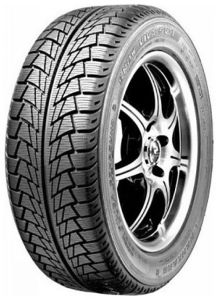
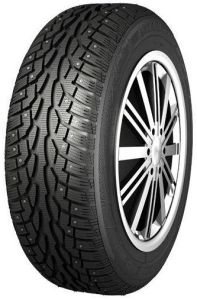
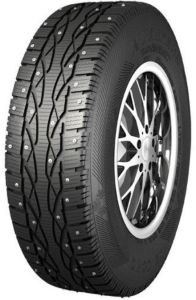
The manufacturer and the two winter series
Nankang Rubber Tire is a Taiwanese company founded in 1959. It has two plants in Taiwan, Nankang and Hsinfung, and one in the Chinese province of Jiangsu; it obtained the E-Mark certificate for exports to Europe in 1991. A mid-price segment and a rare presence in European test tables - that is the context for everything else.
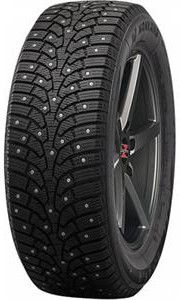
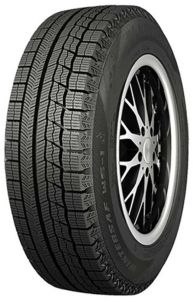
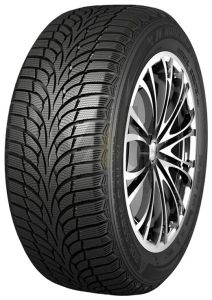
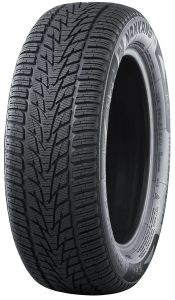
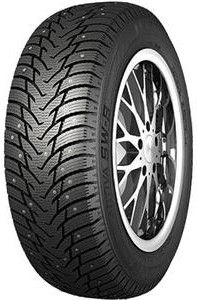
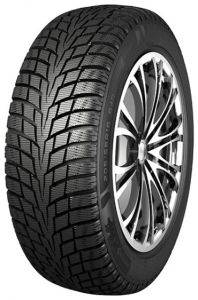
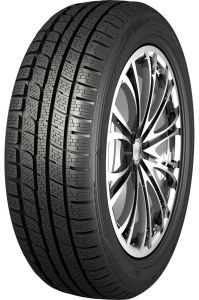
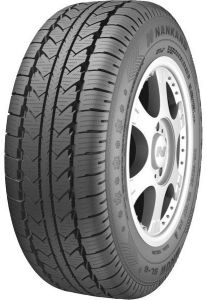
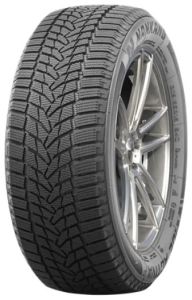
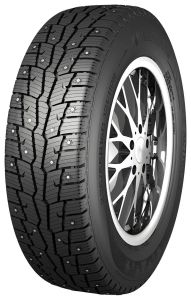
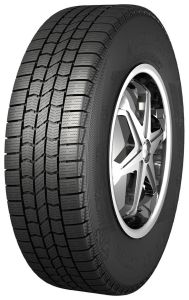
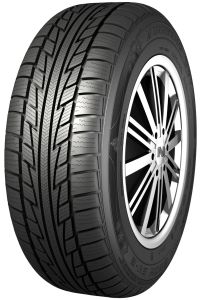
The winter range splits into two series, and the name tells you the job. Ice Activa leans towards ice: it covers the main studded models, the studless ICE-1 and ICE-2, the WS-1 with the widest choice of sizes and the IV-1 for vans. Winter Activa is a Central European type of winter tyre, built for wet tarmac and wet snow rather than bare ice; it holds the SV-3, SV-4 and the SV-55 for SUVs. The Snow SL-6 for commercial vehicles stands on its own.
In practice, choosing between the series means choosing between ice and a wet main road. An icy country road and frozen gravel call for Ice Activa; a salted city artery and wet tarmac call for Winter Activa.
The model range by intended use
The table lists the core models of the range. The diameter column shows the sizes in which a model is made; what can actually be bought today is shown by the list above. The range also includes smaller series, for example the SW-7, WA-1, SV-1, SV-2 and IA-1, where stock for a specific size turns up less often.
| Model | Studs | Intended for | Diameters | 3PMSF |
|---|
| WS-1 | studless | passenger cars and SUVs | R14-R21 | yes |
| Ice Activa SW-8 | studded | passenger cars and SUVs | R14-R19 | yes |
| Ice Activa Grip 2 (SW-9) | studded | passenger cars and SUVs | R14-R20 | yes |
| Ice Activa ICE-1 | studless | passenger cars | R14-R19 | yes |
| Ice Activa ICE-2 | studless | passenger cars and SUVs, XL | R14-R20 | yes |
| Winter Activa SV-3 | studless | small and medium passenger cars | R12-R21 | yes |
| Winter Activa SV-4 | studless | passenger cars, including more powerful ones | R13-R21 | yes |
| Winter Activa SV-55 | studless | 4x4s and SUVs | R15-R20 | yes |
| IV-1 | studded and studdable | van, C marking | R13-R17 | yes |
| Snow SL-6 | studless | van, C marking | R12-R17 | yes |
In every model the tread pattern follows the surface the tyre has to work on. On the studded ones it is built around the stud layout: on the IV-1 for vans the studs are placed irregularly so that no steady drone builds up, while the Ice Activa Grip 2 uses triangular carbide studs instead of round ones. On the studless models the same work is done by sipes and serrated groove walls.
Studded or studless - the route decides that, not taste. An untreated, frozen country road is studded-tyre territory: in a Swedish VTI study new Nordic studless tyres braked on smooth ice in a distance roughly a quarter longer than studded ones, and Central European winter tyres in a distance roughly half as long again. On wet tarmac the ratio is reversed, so for a city driver a studless model is usually the wiser choice.
The calendar is set by law. CSDD requires winter tyres from 1 December to 1 March on vehicles with a gross weight of up to 3500 kg, and since 1 December 2024 only the 3PMSF marking counts for the winter period; the M+S lettering alone is no longer enough. For studs the window is wider, from 1 October to 1 May, but one car may not carry studded and studless tyres at the same time. CSDD separately reminds drivers that the tyres on one axle must be from the same manufacturer and have the same tread pattern, so two different Nankang models may not be fitted on one axle either. The minimum tread depth in winter for a passenger car is 4 mm. In the warm half of the year the soft winter compound wears noticeably faster, so swapping the set back in spring matters just as much.
Two things about this range worth knowing before you choose a size:
- For a heavy car, look at XL. The reinforced version is widely available in this range; in the case of the ICE-2 it is the entire model.
- Diameter cuts the list in half. Most sizes fall in the R16-R18 range. Small rims are covered mainly by the SV-3 and the IV-1 for vans, large ones by the WS-1 and, among the studded models, the Ice Activa Grip 2.
What the independent tests show
This is the part where the brand has a hard time. In the ADAC 2025 winter tyre test the Winter Activa SV-4 in 225/40 R18 received an overall score of 5.2, rated poor; its weakest result was on wet surfaces at 3.0, and the projected mileage of 34,200 km was the lowest of all the tyres tested. ÖAMTC gave an identical 5.2 in the same size and did not recommend the tyre. In the Tyre Reviews summary the SV-4 ranks 22nd out of 31. The older SV-3 in the Auto Bild 2022 winter tyre review finished 34th out of 57 in 215/55 R17, while in the ÖAMTC 2018 test it scored 5.5 and was not recommended.
For the rest of the range there simply are no tests. The studded SW-8, Ice Activa Grip 2, SW-7 and IV-1 have not appeared in the ADAC or Auto Bild tables, nor in the Nordic ice tests at Test World, and for the ICE-1 Tyre Reviews states outright that there is no magazine or motoring club test. That does not mean the tyre is bad, but it has no independent confirmation, and the buyer carries the risk.
What is there to judge when there is no test? The EU label with its wet grip letter and exterior noise in decibels, the 3PMSF marking, for studded models the stud density the manufacturer declares, and the place the model holds in the manufacturer's own range. For the Ice Activa Grip 2, Nankang quotes a stud count of 190% of the Nordic regulatory baseline, against 170% for its predecessor the SW-8, and promises 11.6% better braking on ice. The comparison is with the company's own previous model, not with a competitor, and that is how it should be read.
Who Nankang suits best
It suits the everyday driver who covers a moderate winter mileage in a mid-range car or SUV. For that buyer the main thing is to find their size and get through the winter on a legal set. It also suits a van: there are C-marked models in the range, and the IV-1 can be bought studdable so that the studs can go in later if the route calls for it. In a commercial vehicle tyre that is a fairly rare option. There is no separate line for electric vehicles here, so the choice rests on the load index and the size, not on a special designation from the brand.
There are also cases where this brand is the wrong choice. A heavy, powerful car that spends the winter covering fast miles on wet main roads: in the ADAC 2025 test the wet surface was precisely the weakest result. A car with factory RunFlat equipment and no spare wheel - there is almost no self-supporting stock in the winter range. And for a buyer who wants premium performance measured in independent tests, this is not the right shelf.