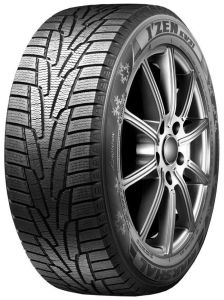
The thinking and technology behind Kumho winter tyres
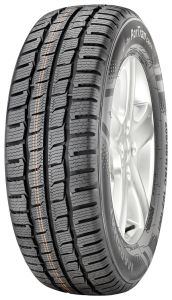
Kumho Tire is a South Korean manufacturer, and in Europe its winter range is sold under the WinterCraft name. The first part of the name tells you what a tyre was built for: WP is a passenger car winter tyre, WS is the same construction for SUVs and crossovers, Ice or Wi is the Nordic line with studded and studless models, while Winter PorTran, Winter ProTran and Power Grip are C-type tyres for vans and light commercial vehicles.
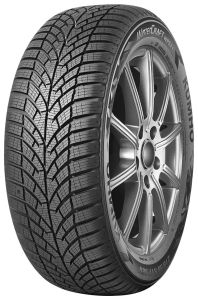
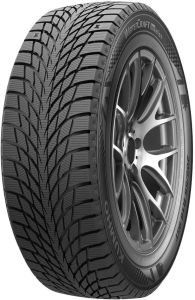
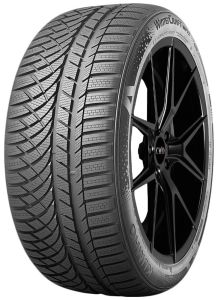
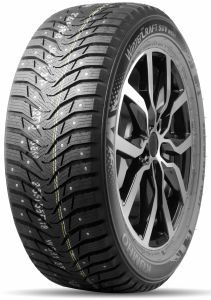
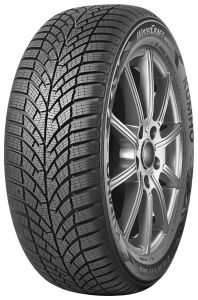
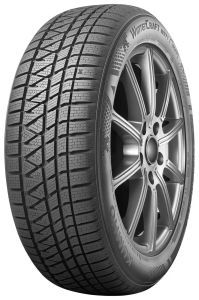
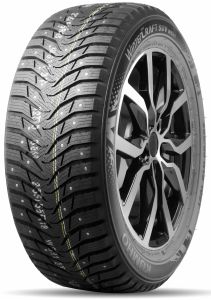
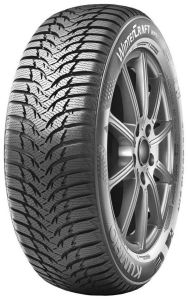
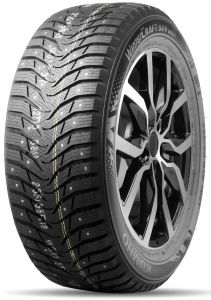
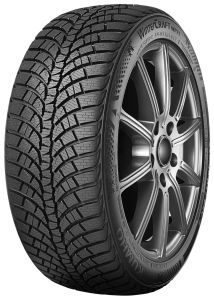
The manufacturer itself splits its Nordic catalogue into two categories: WINTER ALPINE and WINTER ARCTIC. The Alpine-type tread is firmer, with V-shaped and zigzag grooves to channel water away, a dense network of interlocking 3D sipes and snow ejectors. On the Arctic side the tread is more open, the compound softer and there are more biting edges. For the WP52 the manufacturer states that the profile increases the contact patch by up to 10 per cent, while for the WS71 SUV model the same source mentions an asymmetric tread with zigzag channels and a noise-reducing shoulder area. The mechanism is the same in every case: in the cold a winter compound stays flexible, the sipe edges add grip on snow, but only studs physically bite into ice.
The model range by intended use
One question sorts the range out: what kind of car are the tyres meant for. For everyday city and motorway driving the WP line fits, for a heavier crossover or SUV the WS line, and if grip on ice is what matters, look at the Ice models. A van takes nothing but a C-type tyre, and Kumho's winter range has those too.
| Model | Studs | Segment | Available diameters | 3PMSF |
|---|
| WinterCraft WP52+ | Studless | Passenger cars, compact crossovers, EVs | R13-R20 | Yes |
| WinterCraft WP52 | Studless | Passenger cars, EVs | R13-R20 | Yes |
| WinterCraft WP71 | Studless | Passenger cars | R16-R19 | Yes |
| WinterCraft WP72 | Studless | UHP, more powerful passenger cars | R17-R21 | Yes |
| WinterCraft Ice WP51 | Studless | Compact passenger cars | R13-R17 | Yes |
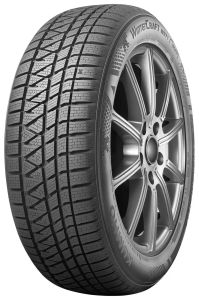
| WinterCraft WS71, WS71 SUV | Studless | SUVs and crossovers | R15-R22 | Yes |
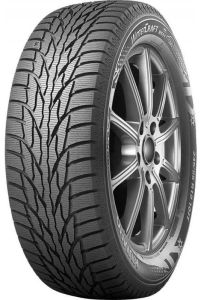
| WinterCraft Ice SUV WS51 | Studless | SUVs, EVs | R15-R19 | Yes |
| WinterCraft Ice WI51 | Studless | Passenger cars, SUVs | R14-R20 | Yes |
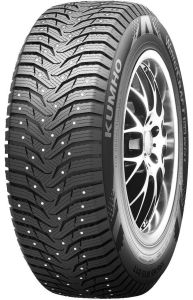
| WinterCraft Ice WI32 | Studded or studdable | Passenger cars, SUVs | R13-R20 | Yes |
| WinterCraft Ice WI31+ | Studded or studdable | Passenger cars | R15-R19 | Yes |
| WinterCraft Ice Wi31 | Studded or studdable | Passenger cars | R15-R16 | Yes |
| WinterCraft SUV Ice WS31 | Studded or studdable | SUVs, crossovers | R16-R21 | Yes |
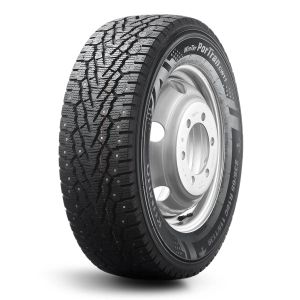
| Winter PorTran CW11 | Studded or studdable | Commercial vehicles (C) | R14-R17 | Yes |
| Winter ProTran CW51 | Studdable, supplied unstudded | Commercial vehicles (C) | R14-R17 | Yes |
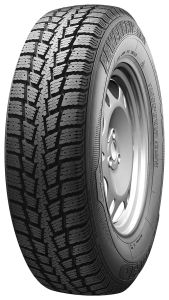
| Power Grip KC11 | Studded or studdable | Commercial and off-road (C) | R15-R17 | Yes |
Studs matter more than the name of the line. On ice a studded tyre holds better, so it belongs on ungritted country roads and icy yards. The studless Ice WI51 suits the same route if studs are a problem because of noise or an underground car park. In town, where the streets are gritted and cleared, the WP and WS lines give you more.
The table is missing one important column: load capacity. XL versions are widely available across Kumho's winter range, though not in every size, so check the load index and speed rating before you order. Cabinet of Ministers Regulation No. 295 requires the tyre's speed category and load index to be no lower than the figures set in the vehicle's technical specification. Look for the numbers you need on the sticker in the driver's door pillar, inside the fuel filler flap or in the owner's manual; the figures for a fitted tyre can be read on the sidewall after the size. For a van the index is worked out for a full load, and it often differs between the front and rear axle.
The same rules ban mixing studded and studless tyres on one axle, or tyres of a different size and tread pattern. In practice that means buying four tyres at a time, or at least in pairs for one axle. The studdable models in the Kumho range are mainly the Ice line, along with Winter PorTran CW11, Winter ProTran CW51 and Power Grip KC11; the WP and WS models are not studdable.
What the independent tests show
In the Auto Bild 2025 winter tyre test in size 225/40 R18 the WinterCraft WP52+ made the top five and took the price-performance winner title with scores of 96.8 % in the dry, 95.1 % in the wet and 96.5 % on snow. Every tyre that finished ahead of it was a premium model.
The picture for the older WP52 is more mixed. In the ADAC 2023 test in size 225/45 R17 its overall score was 2.7, which ADAC rates as satisfactory (on this scale a lower number is better). On winter surfaces it scored 2.3, and for projected mileage 0.7, the best result in the test. In the 2024 braking test of 55 tyres in size 205/55 R16 it posted the best wet braking in the test, 34.6 m. The same year, in the ADAC test in size 215/55 R17, it finished 12th out of 16, and its aquaplaning resistance was below average. Wet braking and aquaplaning resistance are not the same thing.
In a 2025 test of studded and studless tyres in size 205/55 R16 the studded Ice WI32 braked on ice in 33.1 m and took second place, but came last of 14 tyres for wet handling. Teknikens Värld rated its comfort low the same year, precisely because of the high noise. One more number helps put the scale in perspective: in the ADAC 2025 test in size 225/40 R18 only six of the 31 tyres earned a "gut", or good, rating, and all six were premium models.
Which models suit Latvian conditions
If your winter mileage is mostly cleared city tarmac and motorway, take the WP52+, or the WS line for a heavier crossover. On clean tarmac studs cost you noise and wear and give back almost nothing. It is the other way round if home sits at the end of ten kilometres of ungritted gravel road, or the yard spends the winter under a layer of ice. There the studded Ice WI32 pays for itself, and the noise is something you put up with. The Ice WI51 is the middle option for anyone who is not allowed studs or simply does not need them.
There are also cases where this brand is not the right choice. If you often drive fast through flooded ruts on a main road, the WP line's aquaplaning resistance is a known weak point and a premium tyre will be safer. For a heavy SUV, the older WS71 is worth comparing with newer Alpine-class models: in the Auto Bild 2020 braking survey of 49 tyres it braked 10.1 % longer on snow than mid-range tyres. The sporty WP72, on the other hand, has no independent professional test at all, only user ratings, so for a quiet family car the WP52+ is the more predictable choice.
The dates winter tyres become mandatory, and when it is worth fitting them earlier, are covered separately - when to fit winter tyres.