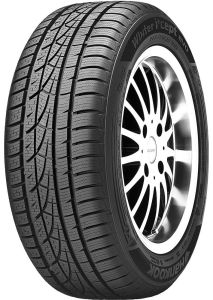
How Hankook builds a winter tyre
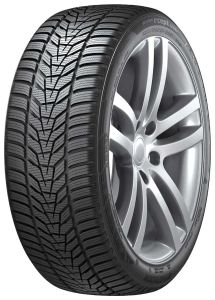
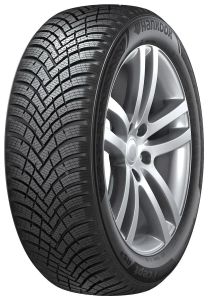
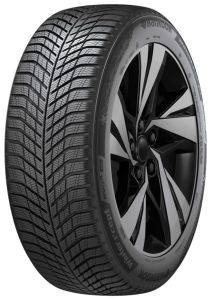
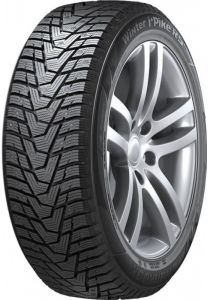
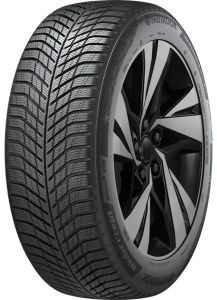
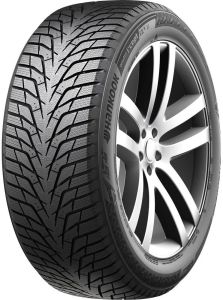
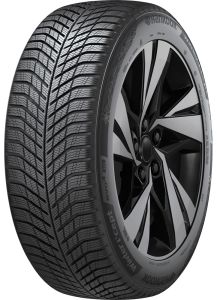
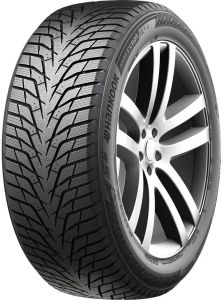
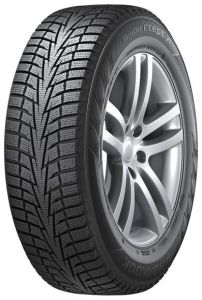
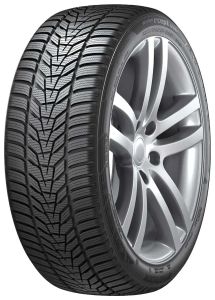
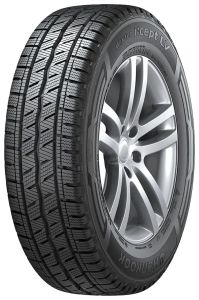
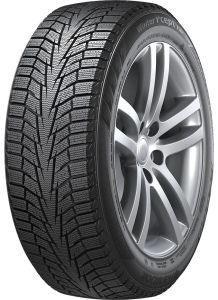
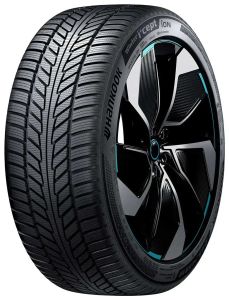
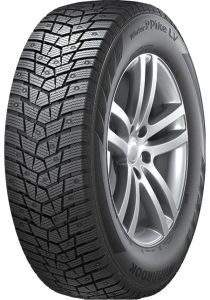
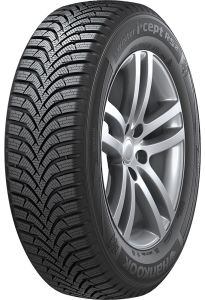
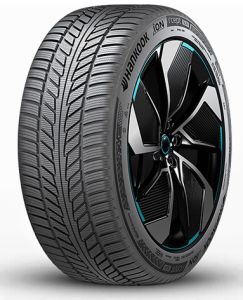
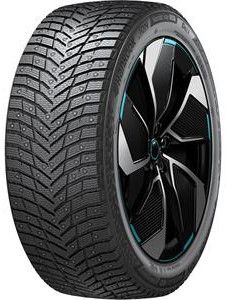
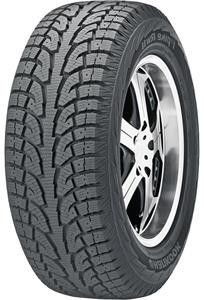
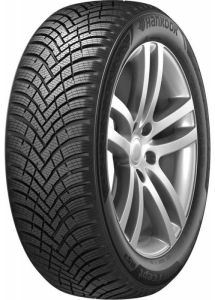
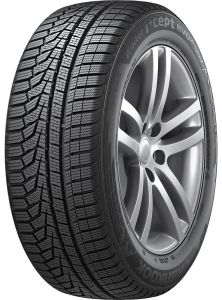
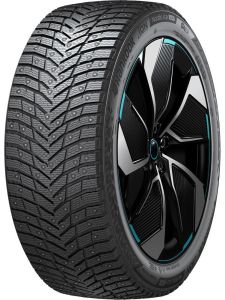
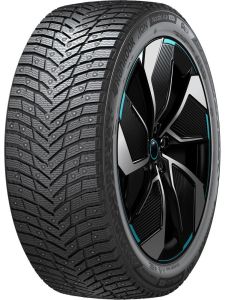
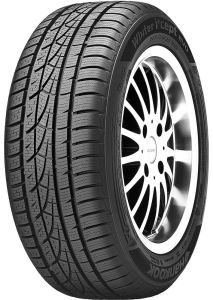
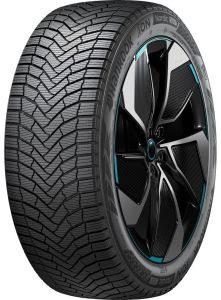
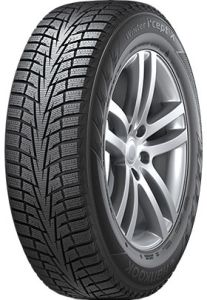
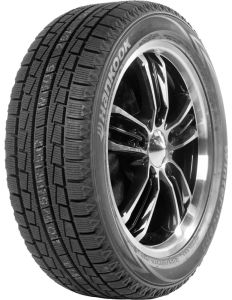
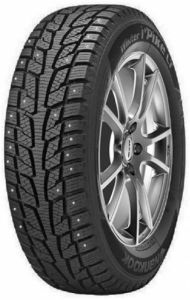
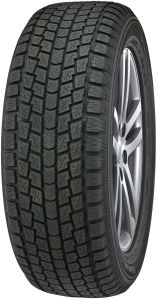
The South Korean manufacturer's winter range splits along a line you can read straight off the name. The i*Pike has housings for metal studs moulded into the tread, and it is those studs that create the grip on ice, biting into the surface mechanically. The i*cept takes the other route: a soft winter compound and a dense network of sipes that open under load and catch the snow with their biting edges. The i*cept family itself splits again. The Central European evo models are built for wet and dry tarmac at higher speeds, while the Nordic-type iZ and RW10 are built for snow and ice. Compound chemistry is no minor detail here. In the case of the Winter i*cept evo4, the manufacturer puts the lower rolling resistance and the 15 percent longer mileage compared with its predecessor down to a lower curing temperature and a more even distribution of silica in the compound (Tire Technology International). The iZ3's lateral grooves are 24 percent wider and its contact patch 10 percent larger than on a conventional winter tyre, Hankook says. For quieter running, some evo3 versions are built with Sound Absorber, a polyurethane foam layer inside the tyre that damps cavity resonance; the same family in our catalogue also includes a RunFlat version.
The model range by application
Behind each model name sits a factory code, and that is what tells the versions apart. W330 is the passenger-car evo3, W330A and W330C are the same tyre in SUV construction, and W429 and W429A are the passenger-car and crossover i*Pike respectively. The SUV version is not simply a larger size: the casing is reinforced for a higher centre of gravity and greater weight, so there is no reason to fit the passenger-car version to a heavy crossover when the SUV variant is available.
| Model | Studs | Segment | Available diameters | 3PMSF |
|---|
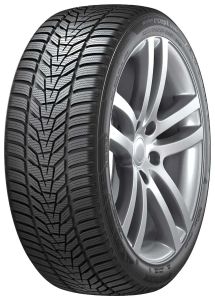
| Winter i*cept evo3 (W330) | studless | passenger car, performance | R15-R22 | yes |
| Winter i*cept evo3 SUV / X (W330A, W330C) | studless | SUVs and crossovers | R17-R22 | yes |
| Winter i*cept evo4 (W340) | studless | passenger car, EV marking | R17-R22 | yes |
| Winter i*cept evo4 X / SUV (W340A) | studless | SUVs and crossovers | R17-R22 | yes |
| Winter i*cept RS3 (W462) | studless | compact and mid-size passenger cars | R14-R17 | yes |
| Winter i*cept iZ3 / iZ3 X (W636, W636A) | studless, Nordic | passenger cars and SUVs, EV marking | R15-R20 | yes |
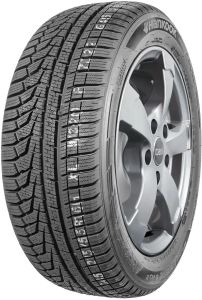
| Winter i*cept (RW10) and iZ2 (W616) | studless, Nordic | passenger cars and SUVs | R13-R21 | yes |
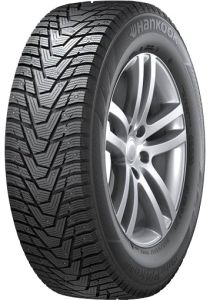
| Winter i*Pike RS2 (W429) | studded and studdable | passenger car | R13-R20 | yes |
| Winter i*Pike RS2 X (W429A) | studded and studdable | SUVs and crossovers | R15-R21 | yes |
| Winter i*Pike LV (RW15) | studded and studdable | commercial vehicles, C marking | R15-R17 | yes |
| Winter i*cept LV (RW12) | studless | commercial vehicles, C marking | R13-R17 | yes |
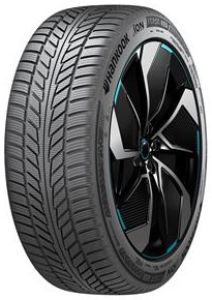
| Winter i*cept iON / iON X (IW01, IW01A) | studless | electric cars | R17-R22 | yes |
Speed ratings differ sharply between the families. In our catalogue the evo tyres carry H, V and W ratings, while the studded i*Pike RS2 comes with the lower T rating in almost every size, and that has to be matched against the manufacturer's figures and your real driving speed. The load index, in turn, must not be lower than the one set by the manufacturer. An XL reinforced casing is available for most of these models, and for heavier electric cars ETRTO has also defined the HL standard, which carries a greater load at the same pressure than an XL tyre of the same size (Michelin). The C-marked versions intended for vans must not be replaced with passenger-car tyres. The 3PMSF marking has to be checked on the specific product - for a few individual items it is not listed in the catalogue, and those are not legal in Latvia during the winter period. Diameter availability changes with every delivery, so it is worth checking your exact size in the list at the top of the page.
What the independent tests show
In ADAC's 2025 winter tyre test, in size 225/40 R18, the Winter i*cept evo3 earned an overall score of 2.4: 2.3 each on dry and wet surfaces and 2.6 in the winter disciplines. Its dry braking distance from 100 km/h was 43.7 m and its wet braking distance from 80 km/h 32.9 m. External noise measured there reached 75.3 dB(A), the rolling resistance class was D and the projected mileage 72,400 km (ADAC). In a test two years earlier, in size 205/60 R16, the Winter i*cept RS3 also scored 2.4, but 1.8 on snow, which was the second-best result; its braking distance on ice from 30 km/h was 19.7 m and the projected mileage 38,700 km (ADAC). The two mileage figures cannot be compared with each other, because both the size and the test year differ.
In Auto Bild's 2025 test, where 20 tyres competed in size 225/40 R18, the evo3 came 6th with a wet braking distance of 55.6 m, 28.1 m on snow and 44.3 m on dry tarmac (Auto Bild, compiled by Tyre Reviews). Broken down by discipline, Tyre Reviews gives the same tyre 87.9 on ice, 82.1 on snow, 82.3 in the wet, 70.2 on dry surfaces and 52.1 for comfort, out of 100. The weakest figure here is comfort, not safety. The studded i*Pike RS2 scores 81.4 out of 100 on ice, but against premium-class rivals it needs 4.1 percent more braking distance.
What suits a Latvian winter and what does not
In Latvia the winter period runs from 1 December to 1 March, and during it vehicles with a gross weight of up to 3.5 tonnes must have tyres carrying the mountain and snowflake marking on all four wheels; the minimum tread depth is 4 mm (CSDD). Almost the entire Hankook winter range meets this requirement. Studded versions are further limited by a seasonal window: they are permitted from 1 October to 1 May (CSDD).
For cleared, salted tarmac the evo3, evo4 or RS3 will do. Where the road is left unmaintained and the yard stays icy all winter, the i*Pike RS2 or the Nordic studless iZ3 and RW10 are the better fit. The line between them is not a matter of taste: in a study by Sweden's VTI, new Nordic-type studless tyres needed roughly 25 percent more braking distance on smooth ice than studded ones, and Central European studless tyres roughly 50 percent more (VTI, Nordic Road and Transport Research). On smooth ice the evo family is therefore not the first choice.
There are also cases where this brand is not the right answer. If the main criterion is a quiet cabin or the absolute shortest braking distance, premium-class models stay ahead in the tests; noise and comfort are consistently rated lower on Hankook tyres than their other figures. For regular winter trips to Poland or the Czech Republic the studded versions are out altogether, because studs are banned there.
The dates winter tyres become mandatory, and when it is worth fitting them earlier, are covered separately - when to fit winter tyres.