There is not a single studded or studdable tyre in the Dunlop winter range. All the work here is done by a compound that stays flexible in the cold and by dense siping. A cleared street, a salted motorway and asphalt with patches of snow - that is exactly the kind of route this range is built for. If every morning starts on an icy country road, this is not the right segment. The core of the range is the Winter, marked for electric vehicles, the Winter Sport 5 and its SUV version; the smaller sizes are covered by the Winter Response 2, while vans are served by the Econodrive Winter with a C marking. Every product carries the 3PMSF marking, so any model is suitable for the Latvian winter period. Sizes start at R14 for compact cars and reach R21 for large crossovers, and a large share of the products come in XL reinforced construction. Below are the models that are in stock or available to order, and after the list - an explanation of which one suits which car.
Dunlop winter tyres
The whole Dunlop winter range is studless: European-type tyres for passenger cars, crossovers and vans from R14 to R21, all carrying the 3PMSF marking.
10 tyre models available
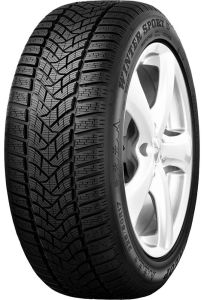

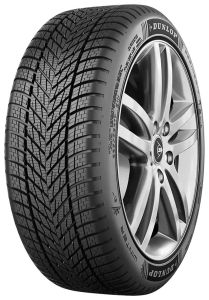
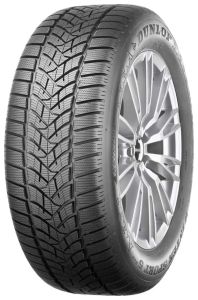
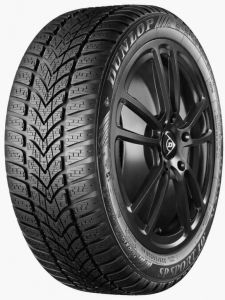
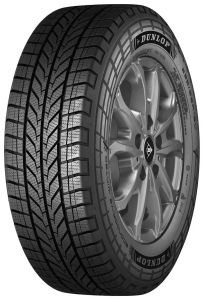
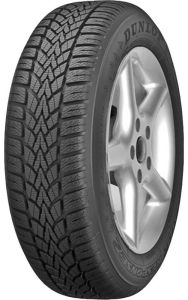
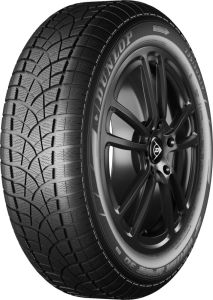
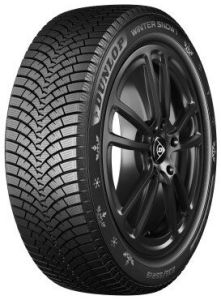
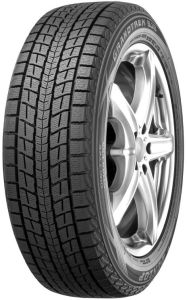
Dunlop winter tyres: models, test results and who they suit
Dunlop winter tyres: positioning and technology
The brand comes from Belfast. In the spring of 1888 John Boyd Dunlop made a pneumatic tyre for his son's tricycle, and the company was founded in Dublin on 18 November 1889 (DPMA). The modern winter programme was created by Goodyear engineers, and the construction shows it: firm tread blocks, a dense network of sipes and a comparatively stiff carcass, as is typical of a European-type winter tyre. Grip on frozen roads comes from the rubber and the edges of the sipes, not from metal. Ownership, however, has changed. Since 7 May 2025 the Dunlop brand in Europe has belonged to Sumitomo Rubber Industries, while Goodyear continues to manufacture and distribute Dunlop passenger car tyres in Europe under a transitional licence (Goodyear announcement). On the shop shelf that changes nothing today, but over the next few years the range and the model names may be reshuffled. The newest line, the Winter, reached the market in March 2025 and, according to the manufacturer's figures, the tyre is up to a kilogram lighter than its predecessor, which also means lower rolling resistance.
The model range by application
The line-up divides fairly clearly: compact cars have their own line, passenger cars and crossovers the broadest one, electric and hybrid cars a separate one, vans the C-marked Econodrive, and alongside them the older SP Winter Sport generations are still holding on, mainly because of their RunFlat versions. The table has no stud column, and the reason is simple: all Dunlop winter tyres are studless, and there are no studdable sizes in the range. The centre of gravity of the range is R16-R18, and that is where the choice is widest, so it is worth starting the search with the size you need rather than with a model name.
| Model | Intended for | RunFlat | Diameters | 3PMSF |
|---|---|---|---|---|
| Dunlop Winter | Passenger cars, hybrids and electric vehicles; EV Ready on the sidewall | No | R15-R21 | Yes |
| Dunlop Winter Sport 5 | Passenger cars and crossovers, the widest size range | In selected sizes | R15-R21 | Yes |
| Dunlop Winter Sport 5 SUV | SUVs and larger crossovers | No | R16-R21 | Yes |
| Dunlop SP Winter Sport 4D | Passenger cars, including those with factory-fitted self-supporting tyres | Yes, in some sizes | R16-R21 | Yes |
| Dunlop SP Winter Sport 3D | Passenger cars and SUVs, older generation; some with a C marking | Yes, in some sizes | R16-R20 | Yes |
| Dunlop Winter Response 2 | Compact and small passenger cars | No | R14-R16 | Yes |
| Dunlop Econodrive Winter | Vans and light commercial vehicles with a C marking | No | R14-R17 | Yes |
| Dunlop Grandtrek WTM3 and SJ8 | Selected large SUV sizes | No | R19 and R21 | Yes |
The Grandtrek WTM3 and SJ8 are left in the range as remaining stock: if you need exactly that size they will do, but there is no point in planning a set around these lines. RunFlat versions may only be fitted to a car that left the factory with self-supporting tyres and TPMS pressure monitoring, and they must not be mixed with ordinary tyres in one set. Two more things are not in the table, because they vary from size to size. The first is rim protection: Dunlop calls it MFS, and in this range it appears mainly in low-profile sizes. The second is factory homologation - MO, N0, AO, BMW star and RO markings all occur, and if the car came from the factory on an OE tyre, it is worth keeping that marking on the next set as well. XL reinforcement is common in the range, and on a heavier car or an electric vehicle it provides a load reserve. On a van, a passenger car tyre in the same size will not take the load, so the C marking is not a formality. Some products are available to order, and their delivery time differs from that of items in stock.
What the independent tests show
The test history of the Dunlop winter models is long and verifiable, but uneven. In the Auto Bild winter test for 2025/2026 in size 225/40 R18 the new Dunlop Winter took second place with a score of 1.2, behind the Michelin Pilot Alpin 5 on 1.1. In the same size ADAC gave the Winter Sport 5 a score of 2.4 and placed it among the six tyres rated "gut" out of the 31 tested. The weak spot is elsewhere: in size 205/55 R16 it scores 1.7 on snow but only 3.4 for noise and comfort, and the dry surface keeps it from a good overall score for driving safety. The SUV version has a different character - in size 235/55 R17 the Winter Sport 5 SUV has an overall score of 2.8, where the strong point is the dry surface at 2.2 and the weakest is snow at 2.8.
A result always applies to the specific size, not to the model as a whole. The Winter Response 2 shows this well: two first places in ADAC tests, in 2019 with 185/65 R15 and in 2021 with 195/65 R15, but only 12th place out of 15 in the 2022 test in 185/65 R15 (Tyre Reviews). The Winter Sport 5 has a longer list of wins: first place in the ADAC tests of 2021, 2022 and 2023, each time in a different size, and in the Auto Bild test of 2018 in size 195/65 R15 (Tyre Reviews). For the older SP lines the data is out of date: the most recent independent result for the SP Winter Sport 4D is from 2014. A good one, but more than ten years old, and it says nothing reliable about today's rubber.
Which drivers Dunlop suits best
The Latvian winter works in favour of this type of tyre. According to the LVĢMC climate normals for 1991-2020, the average air temperature in January is -3.0 degrees and in February -3.1 degrees, so for much of the season the road is wet or snowy rather than permanently icy. This range therefore suits the everyday driver who stays on city streets, motorways and maintained regional roads from December to March, whether the car is a saloon, a crossover or a van. On wet asphalt a European-type studless tyre beats both of the neighbouring alternatives: in the Tyre Reviews comparison the braking distance from 80 km/h was 26.60 m for the European winter tyre, 30.06 m for the studded one and 31.58 m for the Nordic-type studless tyre. Ice turns the ratio around: measured from 25 km/h it was 9.9 m for the studded tyre, 11.06 m for the Nordic tyre and 14.15 m for the European winter tyre. If the daily route runs along an unmaintained country road and ice, studs give an advantage that no Dunlop model replaces, and you will have to look for a set from another manufacturer. Nor will you find the cheapest possible set here.
The whole range meets the legal requirements. In Latvia winter tyres are compulsory from 1 December to 1 March on vehicles with a gross weight of up to 3500 kg, and the minimum tread depth during this period is 4 mm (CSDD). Since 1 October 2024 the winter period specifically requires the 3PMSF marking, so tyres with M+S alone are no longer acceptable (LV portāls). Every Dunlop winter product carries 3PMSF. The size, load index and speed rating you need can be read off the tyre sidewall, the sticker in the driver's door frame, the owner's manual or the fuel filler cap.
Frequently asked questions
Special tyre categories
Niche tyre segments for specific applications - from all-terrain and sports tyres to seasonal and technology-focused tyres.
What our customers say
Happy customers are our best advertisement.


Pasūtijumu saņēmu ātri - par riepām pastāstīt nevaru jo neesmu uzlicis, bet izskatās labi.
Super
Viss process un piegāde ir ļoti ātra.
Labākais riepu veikals, skaidri norādīti riepu parametri, apzīmējumi, ražošanas gads, milzīgs sortiments. Iepērkos jau 3. reizi. Noteikti iesaku. Var atrast ļoti labus akcijas piedāvājumus riepām ar pāris gadu vecāku ražošanas datumu. Ja saņemsiet riepas uz vietas bez piegādes, tad sagatavojiet skaidru naudu, jo nav karšu terminālis.
Man bija nepieciešams daudzpusīgs MICHELIN riepu komplekts. Ne visi pārdevēji Rīgā varēja to piedāvāt. "Rigas Repas" piedāvāja viszemāko cenu. Piegāde bija iespējama nākamajā dienā. Es saņēmu oriģinālu MICHELIN ziemas riepu komplektu par vislabāko cenu Rīgā. Es ļoti iesaku šo pārdevēju.
Super!
Отличный магазин покрышек, быстро , четко и по существу.
Bija labi,riepas " Greenland" kvalitāte apmierina!
Perfekti! Cena, piegāde 😎👍