Triangle's positioning and what the budget segment means for the construction
Triangle Tyre Co. was founded in 1976 in Weihai, Shandong Province, and makes tyres for both passenger cars and construction machinery (Triangle Group). On the Latvian market the brand sits on the budget shelf, and in the construction that means a specific compromise. A winter tyre's performance splits into two parts whose development costs are wildly different. Tread geometry and sipe density can be calculated and reworked relatively cheaply, and that is exactly what works in snow, where grip comes from block edges and sipes biting into the loose surface. The rubber compound is the expensive part. Grip on wet and freshly frozen asphalt comes down to polymer and silica chemistry that takes years to develop and that nobody simply copies. That is why Triangle winter tyres show the same profile test after test: acceptable in snow, weaker in the wet. In Latvia that hits exactly where it hurts. In Riga the average January and February temperature in the 1991-2020 climate normal is -2.2 °C and the average snow depth 4.4 cm (LVĢMC climate data), so a large share of winter mileage is covered on wet, salted asphalt rather than on snow.
The model range by intended use and studding
The models are not ranked better or worse. They divide up by vehicle type, rim diameter and whether the tyre comes studded.
| Model | Studded or studless | Intended for | Diameters | 3PMSF |
|---|
| SnowLink PL02 | Studless | Passenger cars and SUVs in the larger diameters, asymmetric tread | R16-R21 | Yes |
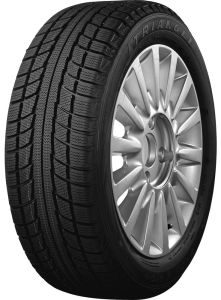
| WinterX TW401 | Studless | Passenger cars, the widest size range in the line-up | R13-R20 | Yes |
| SnowLink PL01 | Studless | Passenger cars, mid-range sizes | R14-R19 | Yes |
| IcelynX TI501 | Studded, some sizes studdable | Passenger cars and SUVs where studs are needed | R14-R20 | Yes |
| EffeXWinter TW421 | Studless | UHP sizes: sports cars, premium saloons and powerful SUVs | R18-R21 | Yes |
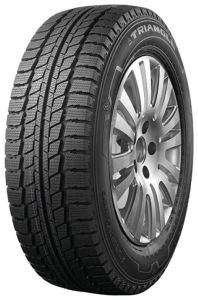
| SnowLink LL01 | Studless | Vans and light commercial vehicles, C marking | R14-R17 | Yes |
| TR777 | Studless | Passenger cars, small budget sizes | R13-R19 | Yes |
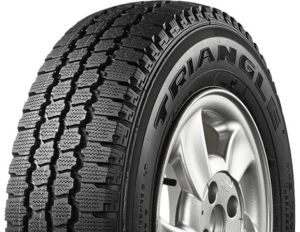
| TR737 | Studless | Vans, C marking in the smaller diameters | R14-R16 | Yes |
| PS01 | Studded | Passenger cars, a narrow choice in the range | Selected sizes | Yes |
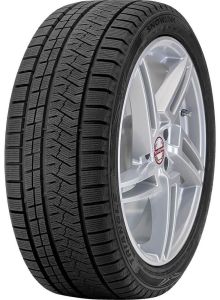
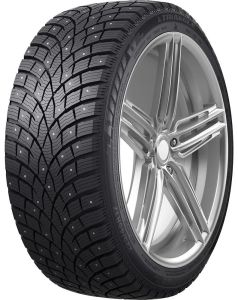
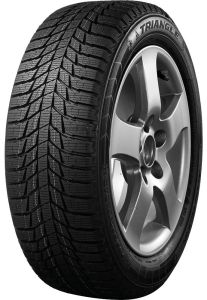
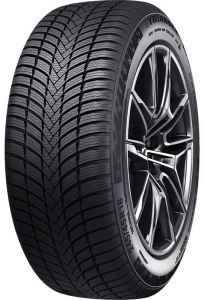
Three models are worth a closer look. The manufacturer describes the PL02 as an asymmetric tyre with three zigzag grooves and closed 3D sipes (Triangle Tire); a closed sipe means the block flexes less under braking, and on a firm surface that usually helps more than it does in loose snow. According to the manufacturer the TI501 is a studdable tyre with a high stud density, and it is this model that carries almost the whole studded side of the range; alongside it, individual PS01 sizes turn up in stock from time to time. The brand unveiled its newest model, the TW421, on 7 October 2025 as a directional UHP winter tyre, meaning a V-shaped tread that channels water from the centre out to the shoulders.
A few more things are worth checking before you order:
- Load index. It must never be lower than the car manufacturer specifies. An XL version exists in almost every model, but you check that for the specific size, not for the model name. Sizes and indexes are read off the tyre sidewall, the sticker on the driver's door frame, the owner's manual or the fuel filler cap.
- Rim protection (RP). Some sizes have it, and it earns its keep in town around high kerbs, but not every model offers it.
- RunFlat. There is no such version in this range, so a car that left the factory on self-supporting sidewalls will not find a replacement here.
Independent tests: where they exist and where they do not
Public measurements of budget brands are thin on the ground. Winter tyres are tested independently by ADAC, Auto Bild, Tyre Reviews and Finland's Test World proving ground, but only some of the models in this range have results.
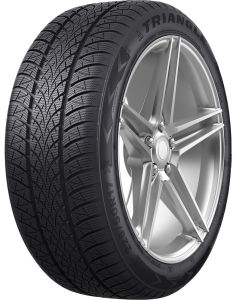
- WinterX TW401. In the ADAC 2024 test in size 215/55 R17 the overall score was 4.8, or unsatisfactory, and the tyre finished 14th out of 16. The winter-conditions score was 2.3, the wet score 4.8 and the braking distance on snow 9.5 m. It was the wet, not the snow, that pulled the score down.
- SnowLink PL02. In Auto Bild's 2023 braking test in size 225/45 R18 the tyre placed 41st out of 54, and its wet braking distance was 14 per cent longer than the premium rivals' and 7 per cent longer than the mid-range tyres' (the results are collated by Tyre Reviews).
- IcelynX TI501. In the Tyre Reviews 2025 studded tyre test in size 235/60 R18 it finished 7th out of eight: a braking distance on ice of 25.48 m against the 11.49 m of the winner, the Nokian Hakkapeliitta 10 SUV. The same tyre posted the best braking on wet and dry asphalt in the test, as well as the lowest noise level, 72.6 dB.
- SnowLink PL01. In the Tyre Reviews 2023 studless tyre test in size 225/45 R17 this model took 7th place in a field of eight, and both snow traction and wet braking were listed among its weak points.
- TR777, SnowLink LL01, EffeXWinter TW421. No magazine tests. For the first two the Tyre Reviews database holds user reviews only, while the TW421 reached the market in autumn 2025 and nobody has published measurements for it yet.
Where there is no test, three checkable things remain. The EU tyre label under Regulation 2020/740 shows wet grip and rolling resistance in classes from A to E, plus noise in decibels, but winter performance appears on it only as a pictogram, so two winter tyres cannot be compared against each other by the label. 3PMSF is a threshold, not a rating: the CSDD requires vehicles with a gross weight of up to 3,500 kg to run on 3PMSF-marked tyres from 1 December to 1 March, and the minimum tread depth during that period is 4 mm. Everything in the range on this page clears that threshold. The third source is the manufacturer's specification: stud density, sipe type and tread direction at least tell you what job the tyre was designed for.
Who this range suits best
Triangle is a logical choice where the budget is the main criterion and the tyre has to be legal during the winter period: an older car, the family's second car, a low annual mileage, or one season before the car is changed. The range does have C-marked sizes for vans and light commercial vehicles; you just have to accept a narrow choice of models. It also helps when the size is a rare one and there are not many alternatives, because this brand covers a wide span of widths and diameters.
There are also cases where this is the wrong shelf. For a heavy or powerful car that covers a lot of wet motorway in winter, a mid-range or premium set pays for itself faster than the price difference suggests. There is no separate line for electric vehicles, and since they are heavier than combustion cars of a similar size, the load index and wear need closer attention. If studs are a non-negotiable requirement, the choice here shrinks to practically one model, and ice grip was precisely that model's weakest side in independent testing. For anyone who wants performance proven in tests, most of the range simply does not provide that proof.