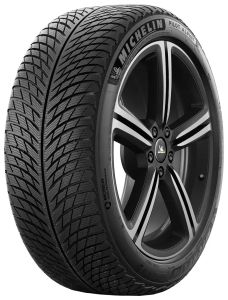
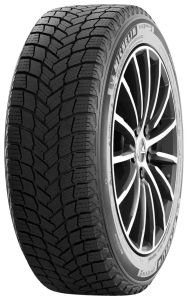
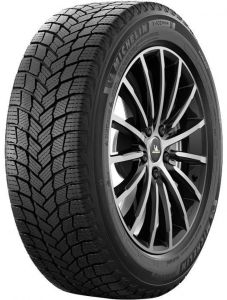
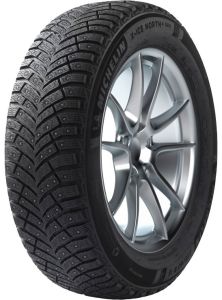
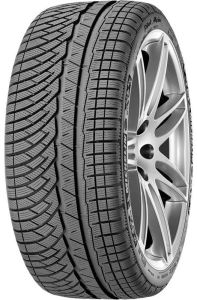
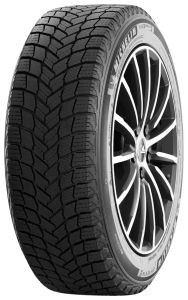
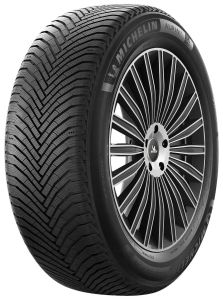
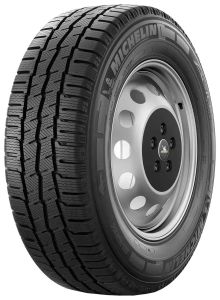
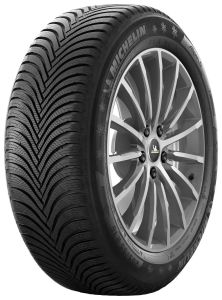
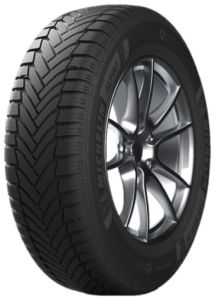
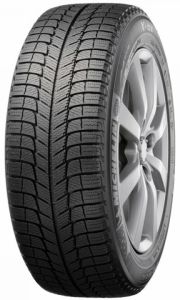
In the fitting bay the difference is obvious straight away: the tread blocks of the Alpin 7 are firm and orderly, while the rubber of the X-Ice Snow gives under your thumb and the sipes criss-cross in all directions. One brand covers two quite different families of winter tyre. The Alpine range - Alpin, Pilot Alpin and the van-oriented Agilis Alpin - is built for the cold, wet tarmac that Riga has for most of the winter. Where there is ice or packed snow under the wheels, the Nordic X-Ice range takes over, and it comes both studless and with factory-fitted studs. No tyre is equally good in both conditions. The list below covers the shop's entire Michelin winter tyre range from R14 to R23, including the separately engineered SUV versions and C-marked commercial vehicle tyres. Every product carries the 3PMSF marking, so they meet Latvia's winter requirements.
Michelin winter tyres
Alpine-class Alpin and Pilot Alpin for cold tarmac, Nordic-class X-Ice for ice - studded and studless, from R14 to R23.
21 tyre models available

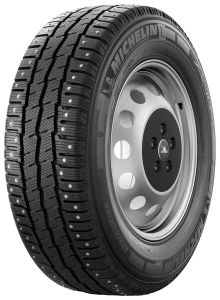
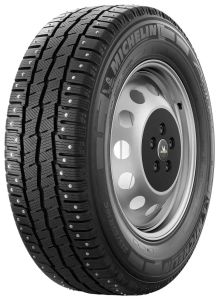
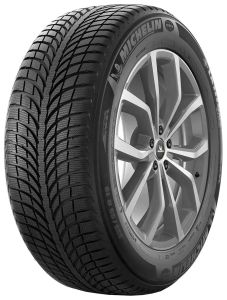
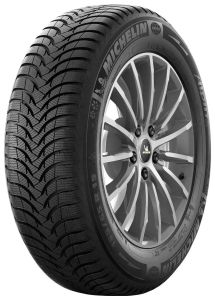
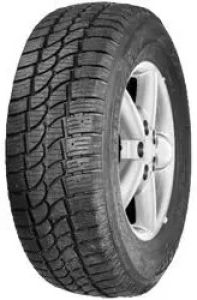
Michelin winter tyres: which class for which winter
From a French factory to two winter classes
Michelin is a French manufacturer, and it divides its winter range by operating temperature rather than by class of car. In its winter tyre guide the company states that the Alpin range works best from +7 down to -20 degrees, while the Nordic X-Ice range is made for conditions down to -40 degrees and for driving on ice. The whole difference begins with the rubber compound and the density of the sipes. Alpine class tread blocks are stiffer and hold their shape on wet tarmac; in the Nordic class the blocks are softer, with a far denser network of biting edges that grips the ice at the point where a stiff block is already sliding.
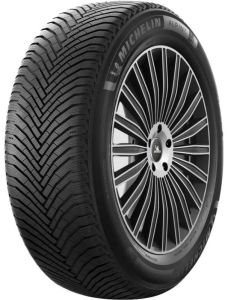
The manufacturer states that on the mass-market Alpin 7 snow braking is 6 percent better and rolling resistance 9 percent lower than on the Alpin 6 (UTAC test in Finland, December 2023, size 205/55 R16 91H). The same source notes that this model's sipes open up gradually as the tyre wears, and that a worn tyre still exceeds the wet grip threshold of European regulation R117. For a heavy electric car the load index is decisive: Michelin explains that at the same pressure an HL (High Load) tyre carries a greater load than an XL tyre of the same size, and that a tyre marked HL may only be replaced with another one carrying the same marking.
The model range by intended use
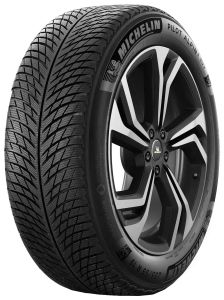
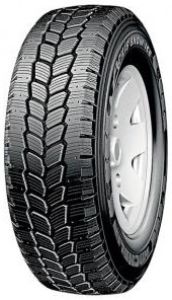
The range covers passenger car tyres, separately engineered SUV versions and C-marked van tyres. An SUV version is not simply a larger size: the Pilot Alpin 5 SUV and X-Ice Snow SUV are built for a heavier vehicle with a higher centre of gravity, so where the same size exists in both versions, a loaded crossover is better off with the SUV variant. The Agilis range is a different construction again - a reinforced casing and high load indices. A passenger car tyre on a fully loaded van is no substitute for it.
| Model | Studs | Segment | Diameters | 3PMSF |
|---|---|---|---|---|
| Alpin 7 | studless | passenger car | R15-R20 | yes |
| Alpin 6 | studless | passenger car | R15-R20 | yes |
| Pilot Alpin 5 | studless | passenger car, EV | R16-R23 | yes |
| Pilot Alpin 5 SUV | studless | SUV | R17-R23 | yes |
| Pilot Alpin PA4 | studless | passenger car | R17-R21 | yes |
| X-Ice Snow | studless | passenger car | R15-R21 | yes |
| X-Ice Snow+ | studless | passenger car, EV | R16-R22 | yes |
| X-Ice Snow SUV | studless | SUV | R16-R22 | yes |
| X-Ice North 4 | studded | passenger car | R15-R23 | yes |
| X-Ice North 4 SUV | studded | SUV | R16-R23 | yes |
| Latitude X-Ice North LXIN2+ | studded | SUV | R17-R21 | yes |
| Agilis Alpin | studless | commercial (C) | R15-R17 | yes |
| Agilis X-Ice North | studded | commercial (C) | R15-R17 | yes |
| Agilis X-Ice North+ | studded | commercial (C), EV | R16-R17 | yes |
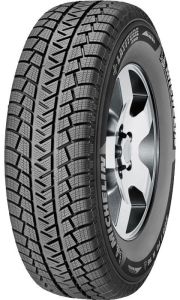
The table shows the core of the range; alongside it the catalogue still carries the older generation Alpin 5, Alpin A4, Latitude Alpin LA2 and X-ICE XI3 in a narrower spread of sizes. Studs are fitted at the factory only. No model in this segment is studdable, so they cannot be added after purchase - if ice means you need them, go straight for the X-Ice North or Agilis X-Ice North range. Run-flat versions are thin on the ground in the winter range and are concentrated in a few Pilot Alpin, Alpin 5 and X-ICE XI3 sizes, so if your car has no spare wheel it is worth checking availability before ordering. Factory homologation markings (MO, MO1, N0, AO, NE0, ND0 and the BMW star) appear on Michelin winter tyres almost exclusively in the Pilot Alpin and Alpin ranges. Most models also come in an XL version, and some of the larger diameter sizes have a rim protector, which is more use against Riga's kerbs in winter than you might think. The load index and speed rating must not be lower than the one set by the manufacturer, and it is precisely this requirement that rules the Nordic class out for some drivers.
What the independent tests show
On tarmac the standout of this range is the Pilot Alpin 5. In the ADAC 2025 winter tyre test in size 225/40 R18, only six of the 31 tyres examined earned a "gut" rating; the Pilot Alpin 5 scored 2.1 overall, which put it second behind the Goodyear UltraGrip Performance 3. According to the Tyre Reviews summary, it was tested 23 times between 2020 and 2025 with 14 wins, including the Auto Bild 2025 test. That same summary separately notes that on ice it falls behind specialised Nordic type tyres.
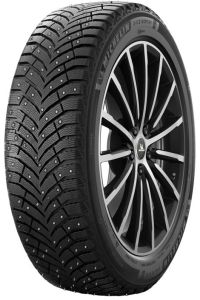
On the Nordic side the picture is the other way round. The X-Ice Snow brakes 5.6 percent shorter on ice and 6 percent shorter on snow than the average premium rival, but its braking distance on a wet surface is 6.6 percent longer. Against it, the studded X-Ice North 4 brakes on average 13.9 percent shorter on ice and accelerates 27.2 percent faster, but it is 25.9 percent noisier and uses 4.7 percent more fuel. In the Teknikens Värld 2025 test the X-Ice North 4 recorded the highest fuel consumption, while the X-Ice Snow received top marks for noise and comfort.
A wet surface separates the two classes even more sharply. In the same test aquaplaning began at 75-77 km/h for Central European, or Alpine, class tyres, but as early as 55.7-64.6 km/h for Nordic studless tyres.
What suits a Latvian winter and what does not
You pick the class by your route, not by engine power. Cleared, salted tarmac in Riga and on the main roads is Alpin 7 or Pilot Alpin 5 territory. An icy gravel road and slopes early in the morning, before the roads have been treated, call for the X-Ice: the studless Snow version for a quieter driving style, the North 4 where there is ice under the wheels every day. The Teknikens Värld testers rated the Central European class as the better one on bare tarmac but not good enough for genuine winter conditions, so there is no point expecting ice tyre performance from a Pilot Alpin 5. The law is the same for both classes: the CSDD points out that since 1 December 2024 only tyres carrying the mountain and snowflake symbol may be used on the road, and that M+S alone is no longer enough. Studs come with a seasonal calendar on top of that, and it differs between Latvia and its neighbours.
The 2024/2025 winter illustrated this choice well. The Latvian Environment, Geology and Meteorology Centre calculated that the average air temperature was +0.2 degrees, or 2.6 degrees above the 1991-2020 norm, that snow cover was thinner than normal in all three months, and that total precipitation was above the norm. Temperatures around zero with nights below freezing produce a glaze of ice, and that is where the Nordic class works best, while the miles of dry and wet tarmac remain the Alpine class's advantage.
There are two cases where this brand is not the right answer. The first: the manufacturer calls for a V, W or Y speed rating, but what you need is specifically a Nordic tyre - in the catalogue the X-Ice range comes with H and T ratings (the X-Ice Snow SUV also in V), so in practice you are left with the Alpine class or another brand. The second: snow and wet surfaces are the priority - in a Tyre Reviews comparison the Nokian Hakkapeliitta R5 won 6 of the 8 shared tests, although the Michelin was better on ice. We sell both brands, so we can say that outright. None of these tyres is any use in summer: by the manufacturer's own figures, the rubber becomes too soft above +7 degrees.
The dates winter tyres become mandatory, and when it is worth fitting them earlier, are covered separately - when to fit winter tyres.
Frequently asked questions
Special tyre categories
Niche tyre segments for specific applications - from all-terrain and sports tyres to seasonal and technology-focused tyres.
What our customers say
Happy customers are our best advertisement.


Ļoti laba sadarbība, riepas svaigas un tikai dažas nedēļas vecas. Labākā cena.
Laba cena un ātra piegāde!
Liels paldies par komunikāciju un iespēju labot pasūtījumu. Riepas atnāca ātri, ērta apmaksa.
Ātrs un kvalitatīvs pakalpojums.
Viss korekti, DOTs precīzs, riepas svaigas, ātra sagāde, ērta saņemšana.
Liels paldies
Хорошие шины. Брал для жены. Зимой проверим.На подходе летние на 2027. Всем удачи в покупках!
Izcili pārskatāms katrs pasūtijuma solis līdz klientam!
Viss ātri un ideāli paldies.