

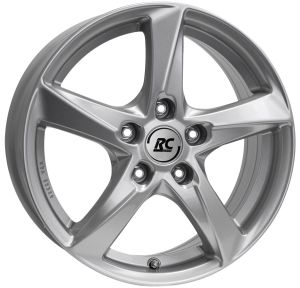
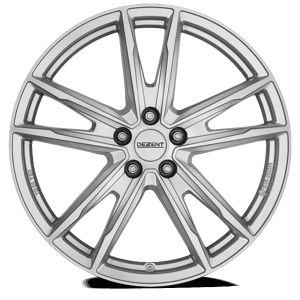

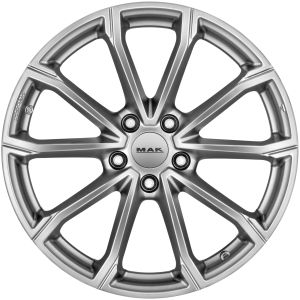

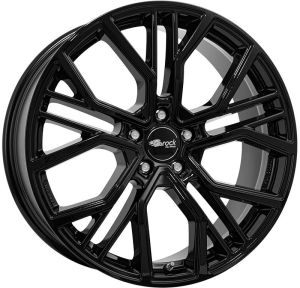



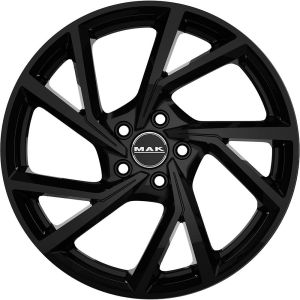
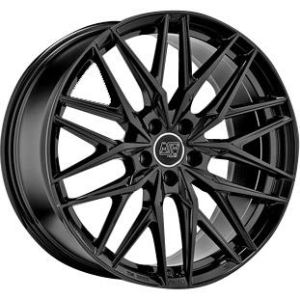
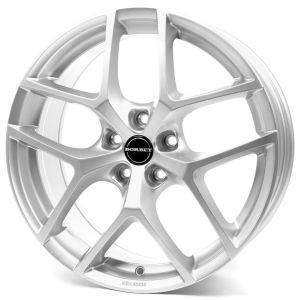
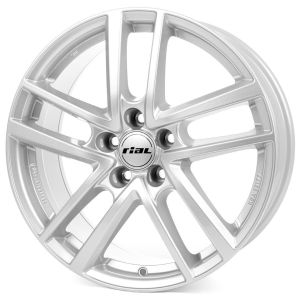

How to choose
Why winter tyres need their own rims
With your winter tyres mounted on a separate set of rims, the seasonal changeover is just a wheel swap. The tyres do not have to be pulled off the rim and fitted back on every autumn and spring, so both the tyre sidewall and the rim edge take less wear. After the first 50-100 km, check that the wheel bolts are still properly tight.
A second set has the same requirements as your summer rims. The bolt pattern (PCD) has to match your car's hub, and the rim size, offset (ET) and tyre size have to be ones the car manufacturer approves. For winter, many drivers choose a smaller rim diameter with a higher-profile tyre, but only when that size is on the manufacturer's list. You will find the approved sizes in the owner's manual and on the sticker in the driver's door frame. The centre bore (DIA) must not be smaller than the hub, and if it is larger, you need hub-centric rings. The bolt seat is set by the rim, so steel rims may need different wheel bolts from alloy rims. Before you buy bolts, check which seat type the rim manufacturer specifies.
What road salt does to the rim finish
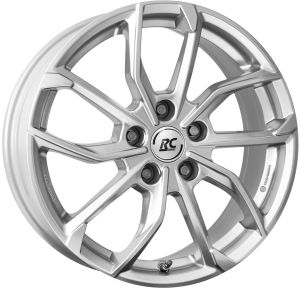
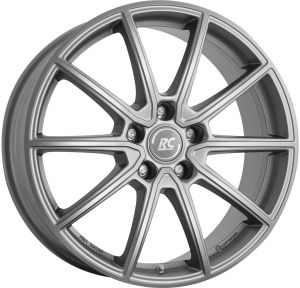
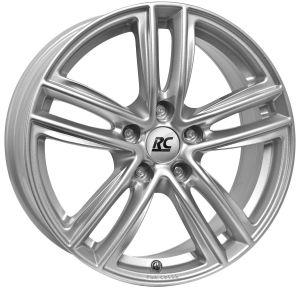
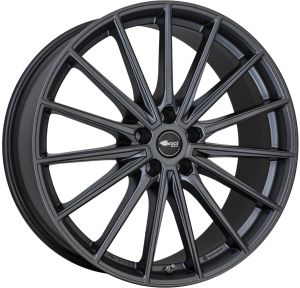
In winter the roads are gritted, and salty water settles on the rims. On painted alloy rims the metal is covered by paint and lacquer. Polished rims have bare aluminium on the face, protected only by a thin layer of clear lacquer. A single chip from a stone or a kerb is enough to let salt reach the metal, and corrosion slowly spreads under the lacquer. That is why polished rims are not included on this page. Steel rims are a simple winter option, but their paint can also get scratched and start to rust.
What "Suitable for winter" means
You will see this label on rims whose manufacturer states that they may be used in winter. It is the manufacturer's own confirmation, not a legal requirement. If the manufacturer says nothing about winter, the rim is not automatically unsuitable - there is simply no such confirmation.
TPMS sensors in the second set
Some cars have a TPMS sensor (tyre pressure sensor) in each wheel that sends the pressure to the dashboard. On a car like that, the winter set also needs its own four sensors. The simplest sign: if the dashboard shows the pressure of each individual tyre, the sensors are most likely in the wheels. Many cars detect a pressure drop from ABS sensor data instead, and those do not need sensors.
In Latvia, passenger cars first registered on or after 1 January 2018 must have the manufacturer's system working. Without sensors, or with sensors that do not work, the car will fail its technical inspection. A Plug&Drive sensor does not need programming. A universal sensor has to be programmed at a tyre service with TPMS equipment before use.
Care and storage
In winter, wash your rims more often, including the inner side, where salt and brake dust build up the most. In spring, before you put the set into storage, rinse it and let it dry completely. It is worth checking the paint for scratches at that point rather than in autumn. Store wheels with tyres lying flat in a stack or hung on a wall bracket, in a dry, cool place. Mark which wheel was at the front and which at the rear, so you can swap them round next season.