




How to choose
Does your car need sensors at all
A car monitors tyre pressure in one of two ways. In a direct system, each wheel has its own tyre pressure sensor inside the rim at the valve, which sends pressure data to the car by radio. An indirect system has no sensors: it uses the ABS wheel speed sensors and notices that a wheel with lower pressure turns differently from the others. Many cars built after 2018 have this kind of system too, and they do not need TPMS sensors.
If the dashboard shows the pressure of each tyre, the car has a direct system. The warning light on its own tells you nothing, as both systems have one. A metal valve with a nut on the outside of the wheel is a strong sign of a sensor, but a rubber valve does not rule one out. The safest way is to check the car's owner's manual.
Original, Plug&Drive or universal sensor
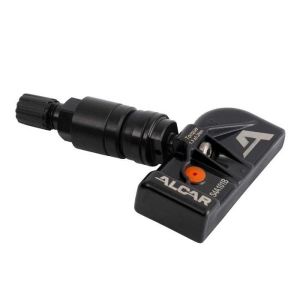
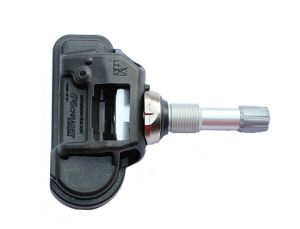
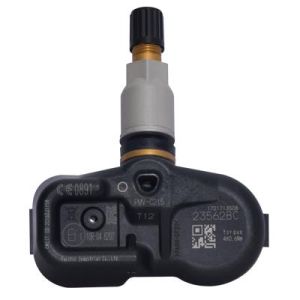
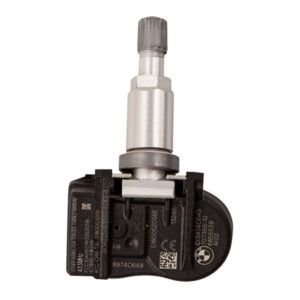
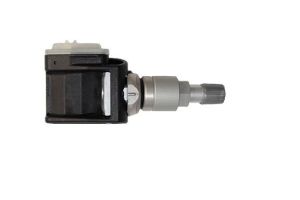
An OE sensor matches what the car manufacturer fitted at the factory, and you look it up by the original sensor's part number. Alcar Plug&Drive sensors come pre-programmed from the factory for specific makes and models, and the manufacturer states that they do not need programming. Universal sensors have to be programmed with a TPMS tool for the specific car's protocol before fitting. A tyre service does this - we do not program or fit sensors.
Once the sensors are in the wheels, the car still has to learn them. Some cars do this on their own while driving, others need a manual procedure or a TPMS tool plugged into the OBD port. Before you buy universal sensors, find out where they will be programmed.
Clamp-in or Snap-in, and the right frequency
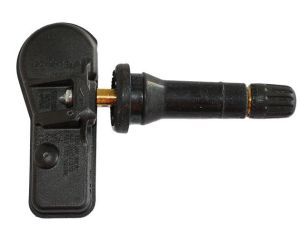
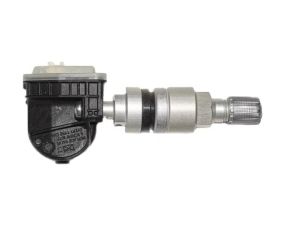
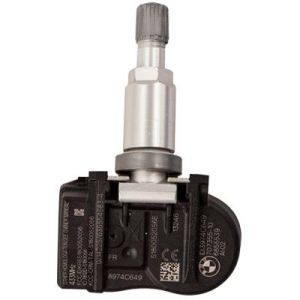
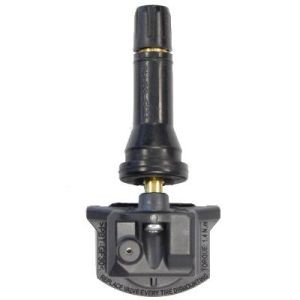
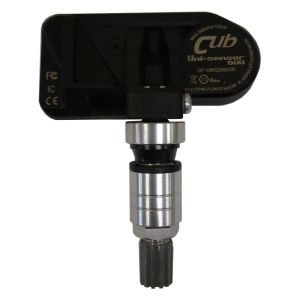
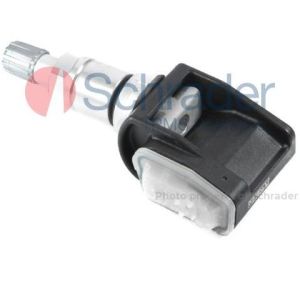
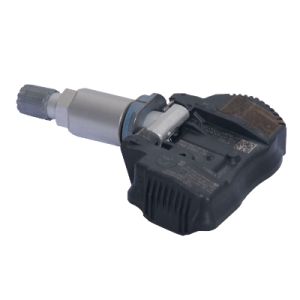
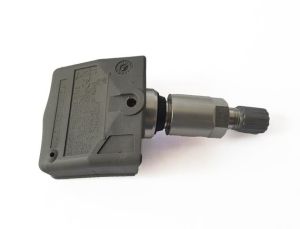
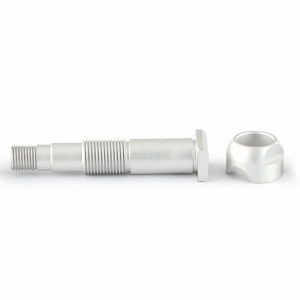
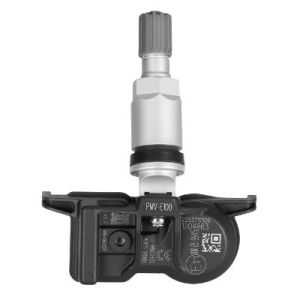
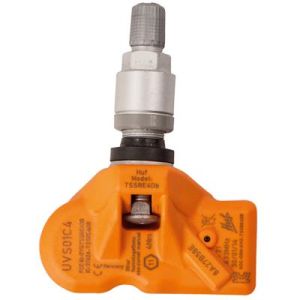
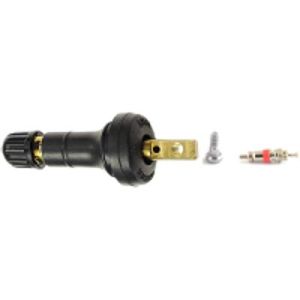
A Clamp-in sensor has a metal valve that is tightened to the wheel with a nut. A Snap-in sensor has a rubber valve that is pressed into the wheel's valve hole like an ordinary valve. The simplest choice is the same mounting type as your old sensor.
Sensors on cars for the European market usually transmit at 433 MHz, while many cars built for the US market use 315 MHz. If your car was imported from the US, check the frequency before buying, because the car will not pick up a sensor on the wrong frequency. Some universal sensors work on both frequencies (315/433 MHz). The Tesla Model 3 from 2021 and the Model Y from 2022 use Bluetooth (BLE) sensors.
Winter wheels, battery and service kits
If the car has a direct system and your winter tyres are on their own wheels, those wheels need sensors too. The battery is usually built into the sensor, so when it runs flat the whole sensor is replaced. ADAC says the batteries last roughly six to ten years.
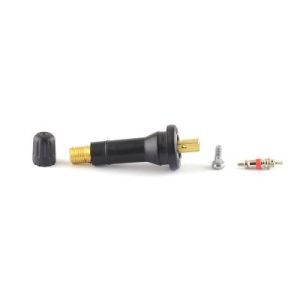
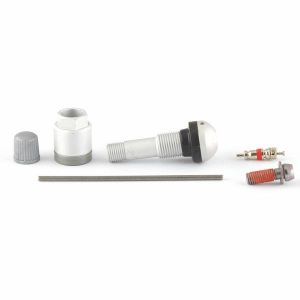
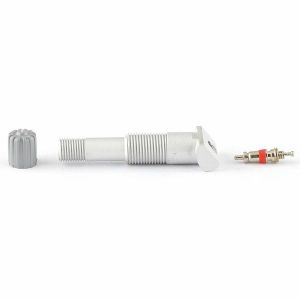
Alcar recommends replacing the valve parts at every tyre change. On a Snap-in sensor the rubber valve is replaced completely; on a Clamp-in valve the seal, nut and cap are checked and replaced as needed. TPMS service kits are made for this. They are not interchangeable, and the kit is chosen by the sensor's manufacturer and generation - for example, they differ for Schrader and VDO sensors.
What the roadworthiness test rules say
In Latvia, Lithuania and Estonia, a car with a manufacturer-fitted tyre pressure monitoring system fails the roadworthiness test if the sensors are missing or not working. In Latvia, Cabinet Regulation No. 295 applies this requirement to M1 category cars first registered on or after 1 January 2018, and a lit system fault indicator also counts as a grade 2 defect. With a grade 2 defect the car fails the test.